Spokesperson media training prepares leaders to answer questions clearly, stay aligned to approved messages and remain credible when an interview becomes difficult. A useful session is not a lecture on how to look confident. It is a structured rehearsal built around the organisation’s real objectives, likely questions, sensitive topics and media environment.
Participants should expect to clarify what they need to communicate, practise interviews under realistic pressure, review their performance and repeat difficult answers until they become clearer and more natural. The aim is not to memorise a script or avoid every uncomfortable question. It is to develop enough message discipline and interview judgement to respond without becoming robotic, defensive or speculative.
Practical spokesperson media training in Malaysia should reflect the spokesperson’s role, the organisation’s risks and the formats they may face, from print and broadcast interviews to press briefings, panels, launches and sensitive stakeholder conversations.
Key Takeaways About Spokesperson Media Training
- The training should be customised around a real business objective, audience and interview context.
- Strong preparation begins with clear messages, proof points and boundaries, not presentation techniques.
- Participants should practise direct answers, bridging, reframing and handling uncertainty without sounding evasive.
- Realistic interview simulations reveal weaknesses that are difficult to identify through discussion alone.
- Video playback can expose distracting habits, unclear wording and missed opportunities to land the main message.
- Feedback should be specific, prioritised and followed by another rehearsal.
- The result should be a more capable spokesperson, not a perfectly scripted performance.
What Is Spokesperson Media Training?
Spokesperson media training is practical preparation for people who represent an organisation in interviews or other public-facing situations. It combines message development, interview technique, scenario rehearsal and performance feedback.
It may be used before:
- A company announcement or product launch.
- A television, radio, print or online interview.
- A press conference or media roundtable.
- An executive profiling campaign.
- A sensitive operational or stakeholder announcement.
- A panel discussion, keynote or industry event.
- A crisis simulation or active response.
The training should reflect the actual communications task. A country manager explaining a market investment needs different preparation from a technical expert discussing product safety. A spokesperson facing a friendly trade interview will encounter different pressure from a leader responding to a reputation issue.
This is why generic public-speaking coaching is not the same as spokesperson media training. Public speaking usually gives the speaker control over the structure and sequence. A media interview gives much of that control to the journalist. The spokesperson must listen, decide what can be answered, respond concisely and still communicate the points the audience needs to understand.
What Happens Before Spokesperson Media Training Begins?
The quality of spokesperson media training depends heavily on the preparation completed before the participant enters the room.
A useful trainer or PR agency will usually request:
- The purpose of the upcoming interview, announcement or media activity.
- The spokesperson’s role and previous interview experience.
- The priority audience and desired communications outcome.
- Current messaging, press materials, facts and supporting evidence.
- Topics that are commercially, legally or reputationally sensitive.
- Known misconceptions, criticism or likely difficult questions.
- Relevant competitors, industry developments and media coverage.
- Internal approval requirements and subjects that need specialist input.
- The likely interview format, language, duration and outlet.
If the organisation does not yet have clear approved messages, the training may need to begin with message house strategy. A spokesperson cannot stay on-message when the leadership team has not agreed on what the message is, what evidence supports it and where the boundaries sit.
Preparation also allows the trainer to build realistic questions. Generic prompts such as “Tell us about your company” may help a nervous beginner settle in, but they do not test readiness for the questions that could change the interview outcome.
7 Essential Stages of Spokesperson Media Training
1. Define the Interview Objective and Audience
Every interview should begin with a clear purpose. The objective is not simply to “get coverage” or “answer the journalist.” It is to help a particular audience understand something important.
The training may begin by asking:
- Who needs to hear this message?
- What should they understand, believe or do afterwards?
- What is the journalist likely trying to establish?
- What would a useful and accurate headline look like?
- Which misunderstandings must be corrected?
- Which commitments can the spokesperson make?
This stage gives the participant a decision filter. Without it, answers can become technically accurate but strategically unhelpful. A spokesperson may spend two minutes explaining background detail while missing the one point the audience actually needs.
The interview context matters as well. A business desk may focus on investment, growth and market impact. A consumer reporter may want practical consequences. A trade journalist may expect technical depth. Spokesperson media training should prepare the participant to adapt the explanation without changing the underlying facts.
2. Build the Core Message and Supporting Proof
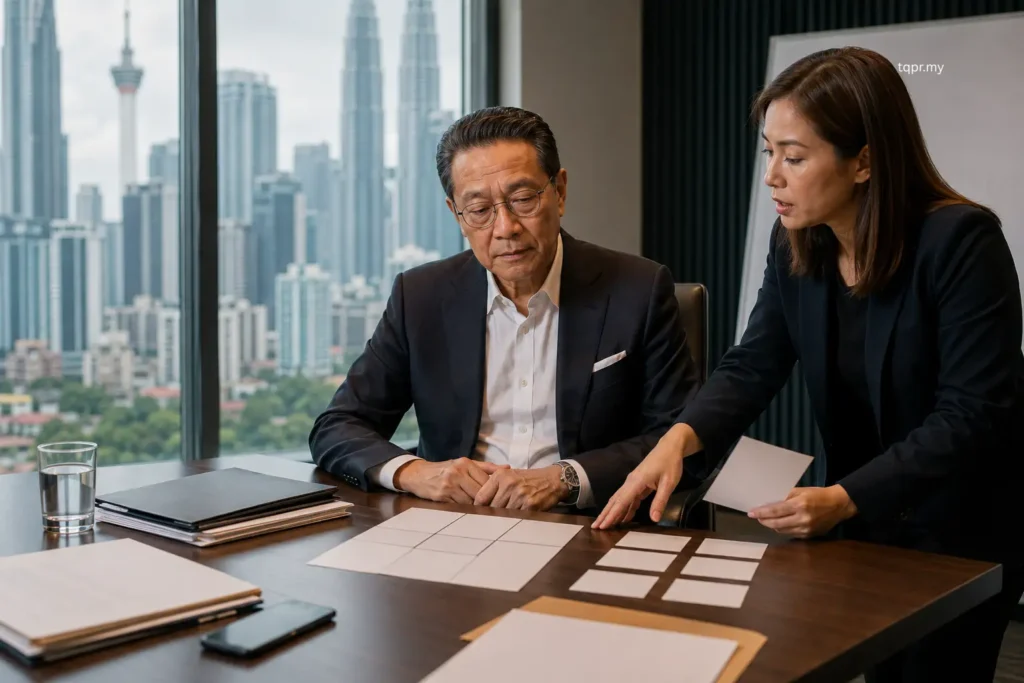
The next stage of spokesperson media training is to define the small number of points the spokesperson needs to communicate consistently.
A practical message structure may include:
- A clear headline position.
- Two or three supporting messages.
- Evidence, examples or data that make those messages credible.
- A relevant action or next step.
- Boundaries around what is unknown, confidential or not yet approved.
The message should be short enough to recall under pressure, but specific enough to be meaningful. “We take this seriously” is not a complete message unless the spokesperson can explain what action the organisation is taking and what happens next.
Proof points are equally important. Journalists may challenge broad claims such as “industry-leading,” “sustainable” or “customer-first.” The participant needs facts, examples and context that can withstand reasonable scrutiny.
The goal is not to force every answer back to the same corporate slogan. It is to give the spokesperson a reliable structure so different answers remain consistent with the organisation’s position.
3. Anticipate Difficult Questions and Pressure Points
Effective spokesperson media training does not rehearse only the questions the organisation wants to receive.
The trainer should test areas such as:
- Gaps between the company’s claim and available evidence.
- Previous incidents, delays, complaints or inconsistent statements.
- Pricing, performance, safety, employment or regulatory concerns.
- Questions involving competitors or wider industry controversy.
- Hypothetical situations that encourage speculation.
- Requests for confidential or commercially sensitive information.
- Leading questions that contain an assumption the company disputes.
- Repeated questioning after an answer has already been given.
Participants should decide in advance which questions they can answer directly, which require careful context and which must be referred to another qualified person. They should also practise acknowledging genuine uncertainty rather than filling the silence with an unsupported answer.
The WHO guidance on journalist interview strategies was developed for vaccine-safety communications, but its broader training principle is useful: understanding common questioning approaches and rehearsing key messages makes it easier for a spokesperson to respond without being pushed into unintended statements.
This preparation should not become an exercise in hiding bad facts. If a question identifies a legitimate problem, the organisation may need a better operational response, clearer disclosure or specialist advice before the interview proceeds.
4. Practise Direct Answers, Bridging and Reframing
A spokesperson first needs to answer the question. Only then should they connect the answer to the message the audience needs.
Common techniques include:
- Direct answering: Respond to the central question before adding context.
- Bridging: Connect a relevant answer to an important related point.
- Reframing: Correct a false or loaded premise before answering in accurate terms.
- Flagging: Signal that the next point is particularly important.
- Signposting: Organise a complex answer into a short, logical sequence.
- Acknowledging limits: State what is not yet known or cannot responsibly be discussed.
For example, a weak bridge may sound like: “I cannot comment on that, but let me tell you about our new campaign.” The shift is obvious and may look evasive.
A stronger response explains the boundary and provides useful information: “I cannot discuss an individual employee matter, but I can explain the process the company follows when a concern is raised and what safeguards are in place.”
The CDC spokesperson preparation guidance recommends entering an interview with a clear purpose, answering in the spokesperson’s own words, reframing loaded language and avoiding jargon. Although written for healthcare communications, these principles also apply to corporate interviews where clarity and credibility matter.
Spokesperson media training should make these techniques sound conversational. If every answer uses the same transition phrase, the spokesperson may appear coached rather than prepared.
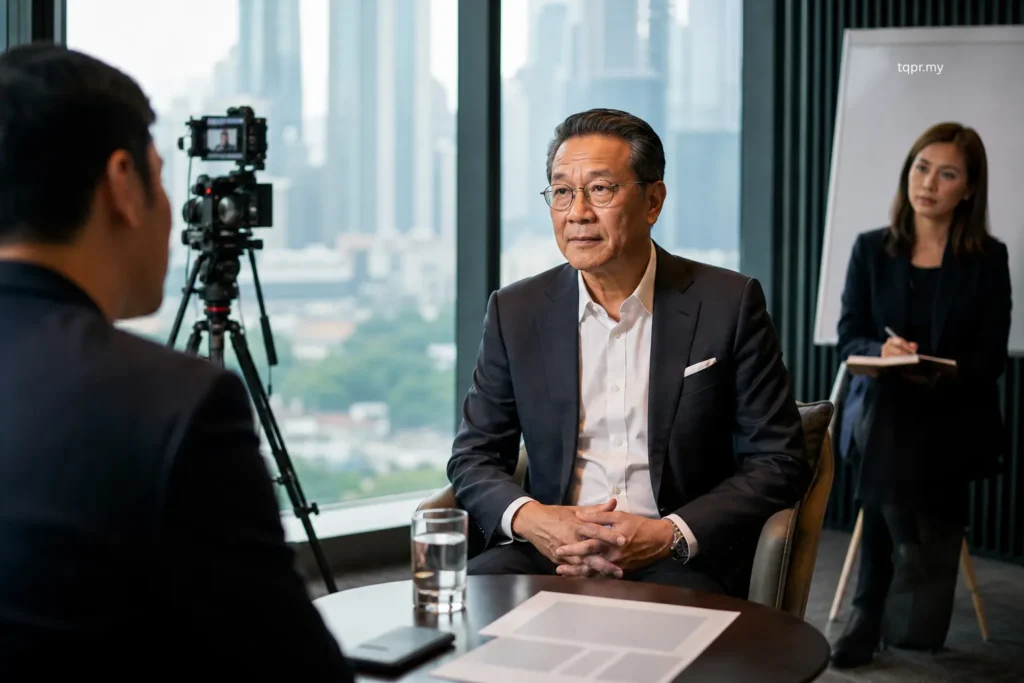
5. Complete Realistic Interview Simulations
The simulation is where preparation becomes performance.
Depending on the brief, participants may face:
- A short television interview with limited time for each answer.
- A radio or podcast conversation where the voice carries the full message.
- A print interview that allows greater depth but more follow-up questions.
- A press conference with several journalists and competing questions.
- A virtual interview with camera, sound and connection constraints.
- A launch interview involving product claims and commercial questions.
- A crisis scenario with incomplete facts and growing pressure.
The trainer may begin with a manageable round, then increase the difficulty by interrupting, repeating a question, challenging an unsupported claim or moving unexpectedly into a sensitive topic. The pressure should be realistic enough to expose habits without turning the session into theatre or humiliation.
Good simulations also reflect the likely outlet and audience. Preparation for media relations in Malaysia may require attention to local relevance, language preference, cultural sensitivity and the different expectations of business, mainstream, trade and broadcast media.
Spokesperson media training becomes particularly valuable at this stage because participants experience the gap between knowing the message and delivering it under pressure. That gap is where long answers, jargon, defensiveness, speculation and missed messages usually appear.
6. Review the Recording and Prioritise Feedback
Where appropriate, the interview should be recorded and reviewed. Playback allows the participant to see and hear what the audience would experience.
The review may assess:
- Whether the participant answered the actual question.
- How quickly the main point appeared.
- Whether key messages and proof points came through.
- The length and structure of each answer.
- Jargon, filler words or overly technical explanations.
- Tone, pace, facial expression and vocal confidence.
- Defensive, dismissive or speculative wording.
- Distracting posture, eye movement or gestures.
- Whether the answer created an avoidable follow-up question.
- How effectively the participant handled uncertainty and boundaries.
Feedback should be prioritised. Giving a participant twenty corrections at once usually makes the next interview worse, not better. The trainer should identify the few changes that will most improve clarity, control and credibility.
Video review should not become cosmetic criticism. A spokesperson does not need to perform like a television presenter. Natural differences in voice, movement and personality are not problems unless they interfere with the message or undermine trust.
7. Repeat the Interview and Build an Action Plan
The final stage is another attempt, not a long discussion about what went wrong.
The participant should repeat difficult questions while applying the priority feedback. This allows both the trainer and spokesperson to confirm whether the answer has become clearer, shorter and more credible.
The session may conclude with:
- Refined key messages and proof points.
- A list of likely questions and improved answer lines.
- Topics requiring further legal, technical or leadership approval.
- Personal delivery priorities for the spokesperson.
- Recommendations for additional rehearsal or advanced scenarios.
- A decision on whether the spokesperson is ready for the planned interview.
- A backup-spokesperson or escalation recommendation.
Spokesperson media training should produce practical next steps. A participant may improve significantly during the session but still need updated facts, stronger message approval or another simulation before facing a high-risk interview.
What Does a Typical Training Session Look Like?
The format of spokesperson media training depends on the number of participants, the difficulty of the scenario and the organisation’s objective. A short interview briefing and a full crisis simulation should not be treated as the same assignment.
An illustrative session may look like this:
| Stage | What participants do | Intended outcome |
| Context briefing | Review the interview, audience, objectives and risks | Understand what success requires |
| Message alignment | Refine the main position, proof and boundaries | Establish consistent answer foundations |
| Technique coaching | Practise direct answers, bridging and reframing | Improve control without sounding evasive |
| First simulation | Complete a realistic interview | Reveal actual strengths and weaknesses |
| Playback review | Analyse message, wording, tone and delivery | Identify priority improvements |
| Second simulation | Repeat difficult questions with adjustments | Convert feedback into usable behaviour |
| Action planning | Record remaining gaps and next steps | Prepare for the real media engagement |
For group training, participants may observe one another’s interviews and learn from common patterns. However, effective spokesperson media training still requires individual practice for each participant. Watching someone else handle a difficult question is not the same as answering it under pressure.
What Spokesperson Media Training Should Not Teach
Good training should not encourage a spokesperson to mislead, invent facts or ignore legitimate questions.
It should not teach participants to:
- Repeat one slogan regardless of what was asked.
- Use bridging to avoid every difficult subject.
- Say “no comment” automatically when a useful explanation is possible.
- Speculate beyond verified information.
- Hide a material problem behind polished language.
- Attack the journalist for asking a challenging question.
- Make promises that the organisation cannot keep.
- Treat confidence as a substitute for evidence.
The purpose is disciplined communication, not manipulation. A spokesperson can protect confidential information, correct an inaccurate premise and stay within approved boundaries while still treating the question and audience seriously.
Where legal, regulatory, safety or employment issues are involved, spokesperson media training should work alongside the relevant qualified advisers. The trainer helps convert approved facts and decisions into clear communication. They do not replace the people responsible for those decisions.
How Should Participants Prepare for the Session?
Participants will get more value from the training if they arrive with enough context to work on real answers.
Before the session:
- Read the current messaging, briefing note and supporting facts.
- Confirm the interview objective and priority audience.
- Identify subjects that require legal, technical or leadership approval.
- List the questions you most hope will not be asked.
- Bring recent coverage, misconceptions or criticism that may shape the interview.
- Confirm whether the session will involve video recording.
- Wear clothing appropriate for the likely interview format if on-camera delivery will be assessed.
- Avoid memorising complete paragraph-length answers.
The last point matters. Memorised responses often collapse when a journalist changes the wording or interrupts. It is more useful to know the central message, evidence and boundaries well enough to answer naturally in different ways.
If the interview is linked to a launch or briefing, the chosen PR format in Malaysia should also shape the preparation. A stage presentation followed by open media Q&A creates different demands from a private one-on-one interview.
Who Should Attend Spokesperson Media Training?
Potential participants include:
- Chief executives and senior leadership.
- Country managers and regional leads.
- Corporate affairs and communications leaders.
- Technical or subject-matter experts.
- Product, operations or safety representatives.
- Human resources or people leaders.
- Investor-facing executives.
- Backup spokespeople who may need to step in quickly.
Seniority alone does not determine who should speak. The best spokesperson for a particular interview is the person who has the relevant knowledge, sufficient authority, appropriate communication ability and availability to prepare properly.
Organisations should also avoid relying on only one individual. A capable backup is important when the main spokesperson is unavailable, conflicted or not the right subject-matter representative for a developing issue.
When Is Additional or Refresher Training Needed?
One session can improve readiness, but interview skill should not be treated as permanently completed.
Refresher spokesperson media training may be useful when:
- The executive has not faced media questions for an extended period.
- The company is entering a new market or communicating in another language.
- The message, strategy or leadership team has changed.
- A new product, transaction or sensitive announcement creates unfamiliar questions.
- Previous interviews produced unclear or inconsistent coverage.
- The spokesperson is moving from print interviews into broadcast or live formats.
- A known issue may escalate into wider scrutiny.
- Several leaders need to communicate one consistent position.
For sensitive situations, training may need to work alongside crisis communications support. The spokesperson should rehearse only from verified facts and approved decisions, with clear guidance on uncertainty, escalation and what happens next.
Frequently Asked Questions About Spokesperson Media Training
Is Spokesperson Media Training Only for Television Interviews?
No. It can prepare participants for television, radio, print, podcasts, virtual interviews, press conferences, panels, launches and stakeholder-facing discussions.
The core principles remain similar, but answer length, delivery and preparation should reflect the format. Television often requires shorter answers and greater visual awareness, while print or trade interviews may demand more explanation and evidence.
Will the Practice Interview Be Recorded?
Often, yes. Recording allows the participant and trainer to review wording, message delivery, tone and visible habits using the same material an audience would experience.
The organisation should confirm beforehand how recordings will be handled, who may view them and whether they will be retained after the session.
How Long Does Spokesperson Media Training Take?
It depends on the objective, participant number and complexity of the scenarios. A focused individual briefing may be shorter than a multi-person workshop or crisis simulation.
Enough time should be allocated for preparation, at least one realistic simulation, specific feedback and a second attempt. A session that contains only theory is unlikely to show how the participant performs under pressure.
Can Training Make Someone Completely Comfortable With the Media?
Not necessarily. Some pressure is normal and may help the spokesperson remain alert.
The more practical objective is to make the situation familiar enough that nerves do not control the answer. Rehearsal gives participants a process for listening, deciding, responding and returning to the main point.
What If the Spokesperson Does Not Know the Answer?
They should not guess. The spokesperson can acknowledge the limit, explain what is being checked and commit to an appropriate follow-up where possible.
Spokesperson media training should help participants distinguish between information they do not yet know, information they are not authorised to discuss and questions that require another expert.
Is Message House Development Included in the Training?
Basic message refinement may form part of preparation, but a company with major alignment gaps may need a separate message-development process first.
Training works best when the central position, proof points and boundaries are sufficiently clear for the spokesperson to practise using them.
How Do You Know Whether the Training Worked?
Useful indicators include shorter and clearer answers, stronger message pull-through, fewer unsupported claims, better handling of difficult questions and more consistent performance between the first and second simulations.
The real test is not whether the participant looked polished during the workshop. It is whether they can communicate accurately and credibly when the real interview becomes less predictable.
Prepare Your Spokespeople for Real Media Questions
The strongest sessions are built around the situations leaders are genuinely likely to face. That means using the real objective, current message, difficult questions and business sensitivities rather than a generic interview script.
Contact TQPR Malaysia with the spokespersons who need preparation, the media situation ahead and the areas where message control feels weakest. TQPR can outline a practical spokesperson media training approach based on the interview format, risk level and readiness required.