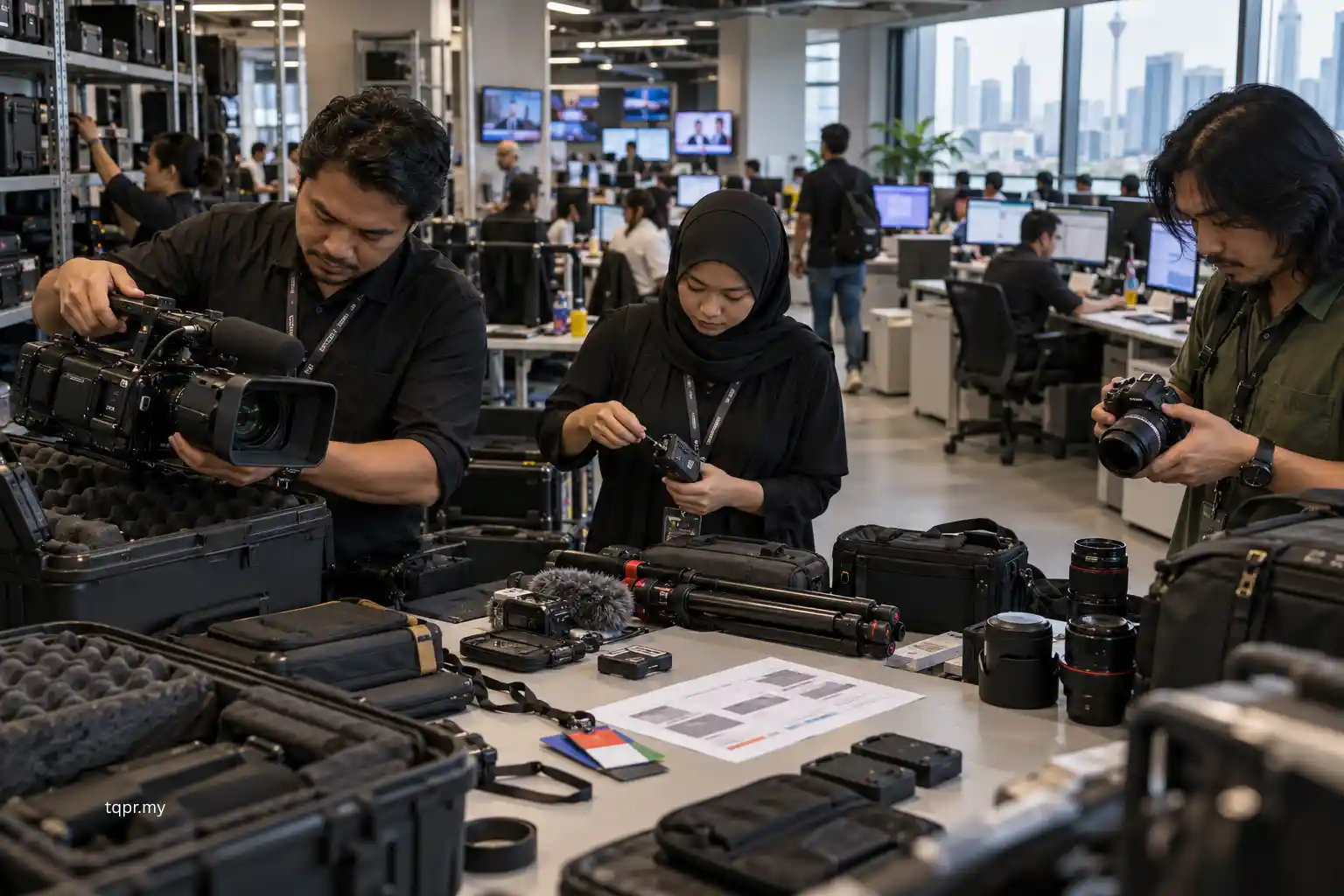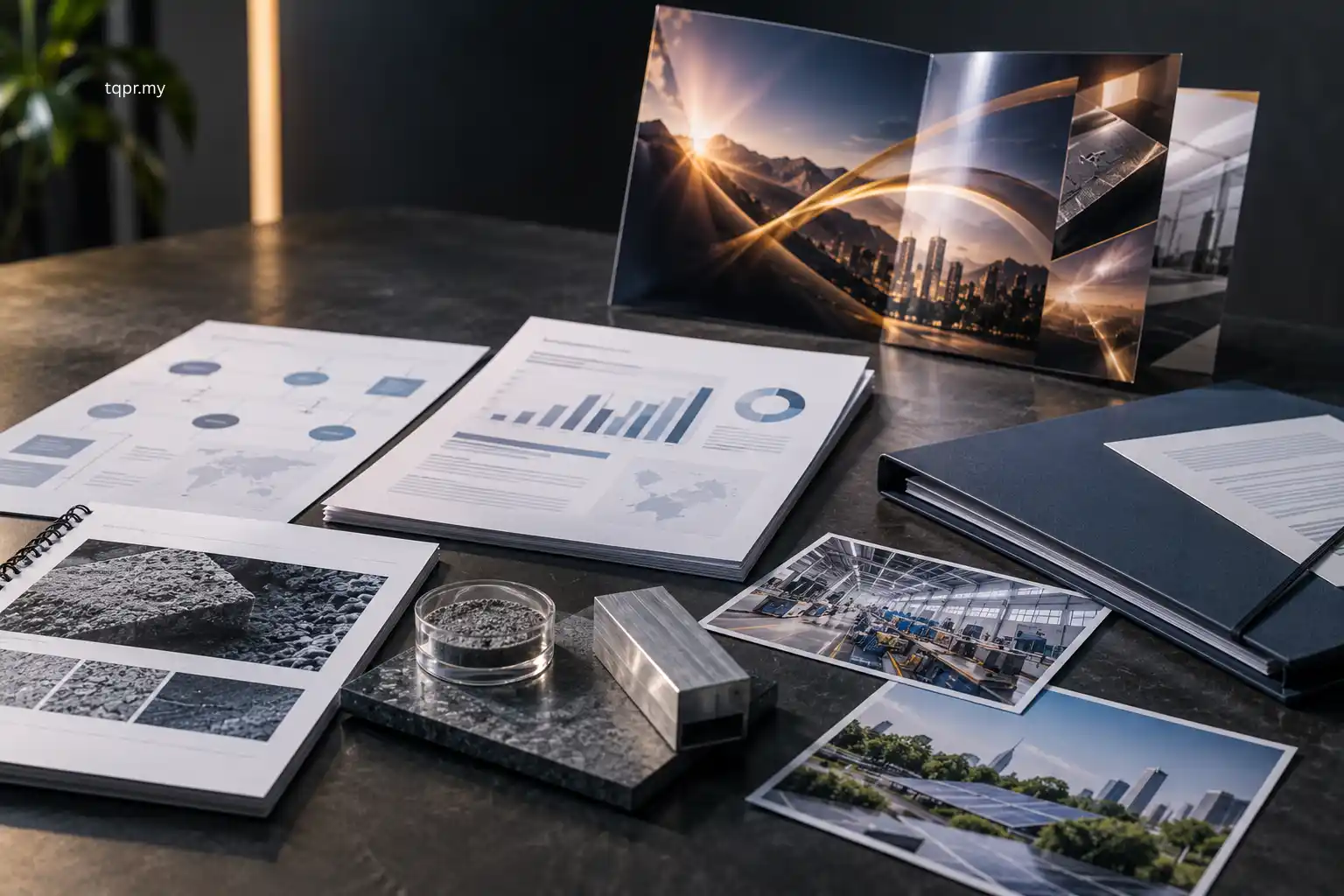

A press kit should give journalists the verified information, background, visuals and contact details they need to understand and cover your story without having to chase your team for basic materials. At minimum, a useful press kit should include the announcement or press release, a concise company backgrounder, spokesperson information, high-resolution images, brand assets, product or service facts, supporting data, a Q&A, relevant multimedia and clear media contact details.
The exact mix changes depending on the story. A product launch, corporate announcement, executive interview and media event do not need identical materials. The principle is the same: a good press kit reduces friction for the journalist while keeping the facts, messages and approved assets consistent.
For organisations running media relations in Malaysia, that means thinking beyond a single PDF attachment. A press kit is better treated as a well-organised package of usable materials that can be shared quickly, updated easily and adapted to the needs of different outlets.
Key Takeaways About Building a Press Kit
- The materials should make accurate information easy to find, verify and use.
- Not every asset needs to be sent to every journalist. The kit should support targeted outreach rather than replace it.
- Separate evergreen company materials from announcement-specific assets so updates are easier to manage.
- Journalists may need different assets depending on whether they work in print, digital, broadcast, business, trade or lifestyle media.
- High-resolution visuals should be labelled clearly and include captions, credits and usage information where relevant.
- The package should contain approved facts and proof points, not exaggerated marketing claims.
- Q&A material can help anticipate obvious follow-up questions, especially for complex or sensitive announcements.
- A named media contact should be available when the story goes live or when questions are likely to arrive.
- Links are often easier to manage than heavy email attachments, especially when multiple images or videos are involved.
- The kit only works if the information is current. Outdated bios, statistics, logos or pricing can create avoidable credibility problems.
What Is a Press Kit?
A press kit is a collection of media-ready information and assets prepared to support journalists, editors, producers and other relevant media contacts covering an organisation, announcement, campaign or event.
It may also be called a media kit, although the term “media kit” is sometimes used in advertising or publishing to describe audience demographics, rate cards and commercial sponsorship opportunities. In PR and media relations, the purpose is different: the kit helps a journalist understand the story and access the material needed to report it accurately.
The materials may be used for:
- A new product or service launch.
- A funding, investment or expansion announcement.
- A corporate milestone or leadership appointment.
- A research report or data-led story.
- A media event or press conference.
- A partnership or memorandum announcement.
- An executive profiling campaign.
- An industry issue or thought leadership initiative.
- A major award or recognition.
- An ongoing online newsroom for inbound media enquiries.
PRSA describes the press kit as a core media relations tool and lists materials such as news releases, media advisories, fact sheets, backgrounders, Q&As and biographies among its common components. More recent media-relations research also reinforces the value of giving journalists credible data, expert access and ready-to-use assets rather than sending generic promotional material.
The practical takeaway is simple: your media package should make the journalist’s job easier without trying to write the finished article for them.
Press Kit vs Press Release: What Is the Difference?
A press release is one piece of communication. A press kit is the wider package around it.
The press release normally explains the announcement: what happened, who is involved, why it matters, when it takes effect and where the journalist can obtain more information.
The wider kit supports that release with the context and assets needed to investigate or develop the story further.
For example, a new manufacturing-facility announcement might include:
- The press release.
- A company backgrounder.
- A factsheet on the facility.
- Investment and employment figures.
- Executive bios and headshots.
- High-resolution site photographs.
- A map or approved infographic.
- A Q&A on operations and timing.
- Media contact information.
This is also why press release distribution and media relations are not the same thing. Sending one document broadly is different from preparing a journalist with the right angle, relevant evidence, useful assets and access to the appropriate spokesperson.
10 Essential Media Assets to Include in a Press Kit
The following ten assets form a strong starting point. They do not all need to become separate documents, and some stories will need additional specialist material. The goal is to cover the information a journalist is most likely to need while keeping the package easy to navigate.
1. The Press Release or Core News Announcement
If the kit supports a specific announcement, the release or official news document should sit near the top.
It should make the central facts immediately clear:
- What is being announced?
- Who is involved?
- Why is it relevant now?
- When does it happen or take effect?
- Where is the activity taking place?
- What evidence supports the significance of the announcement?
- Who can speak about it?
Avoid making the journalist open five separate documents just to understand the basic news.
The release should also remain consistent with the rest of the kit. If the press release says an initiative begins in October but the factsheet says November, the package creates more work instead of reducing it.
For organisations that need help turning technical or internal information into media-facing copy, PR copywriting can be useful before the kit is circulated. The aim is not to make the announcement sound grander. It is to make the claim, evidence and context clearer.
2. A Clear Company Backgrounder
A journalist may understand the announcement but still need basic context about the organisation behind it.
A company backgrounder should provide a concise, factual overview that can answer questions such as:
- What does the company do?
- When and where was it established?
- Which markets does it operate in?
- Who are the key leaders?
- What products, services or business units are relevant?
- What verified milestones help explain its scale or experience?
- Which company name, legal name or brand styling should be used?
The backgrounder should not read like an investor brochure or a long About Us page. Journalists need useful context, not several paragraphs of adjectives.
A simple structure often works best:
- One-paragraph company summary.
- Key facts in bullets.
- Relevant history or milestone timeline.
- Market or operational footprint.
- Official website and contact details.
If the organisation has several divisions or operates regionally, make clear which facts apply to the Malaysian business and which apply globally. This avoids accidental overstatement and makes local relevance easier to understand.
3. Spokesperson Bios and Approved Headshots
The kit should make it easy to identify the people journalists can quote, interview or profile.
For each relevant spokesperson, include:
- Full name.
- Correct job title.
- Short professional biography.
- Areas of expertise.
- Relevant career or industry experience.
- Pronunciation guidance if genuinely useful.
- High-resolution headshot.
- Approved caption or photo credit where required.
Keep the biography relevant to the story. A journalist covering cybersecurity does not need a two-page executive history if only three credentials explain why the spokesperson is qualified to comment.
It is also worth confirming whether the person is actually available for interviews before presenting them as a media contact. A polished biography is not useful if the spokesperson cannot respond within the journalist’s deadline.
Where an executive may face live, broadcast or higher-pressure questioning, the media materials should work alongside spokesperson media training. The materials can provide the facts and key messages, but the spokesperson still needs to answer naturally, handle follow-up questions and avoid speculating beyond what is verified.
4. High-Resolution Images With Captions and Credits
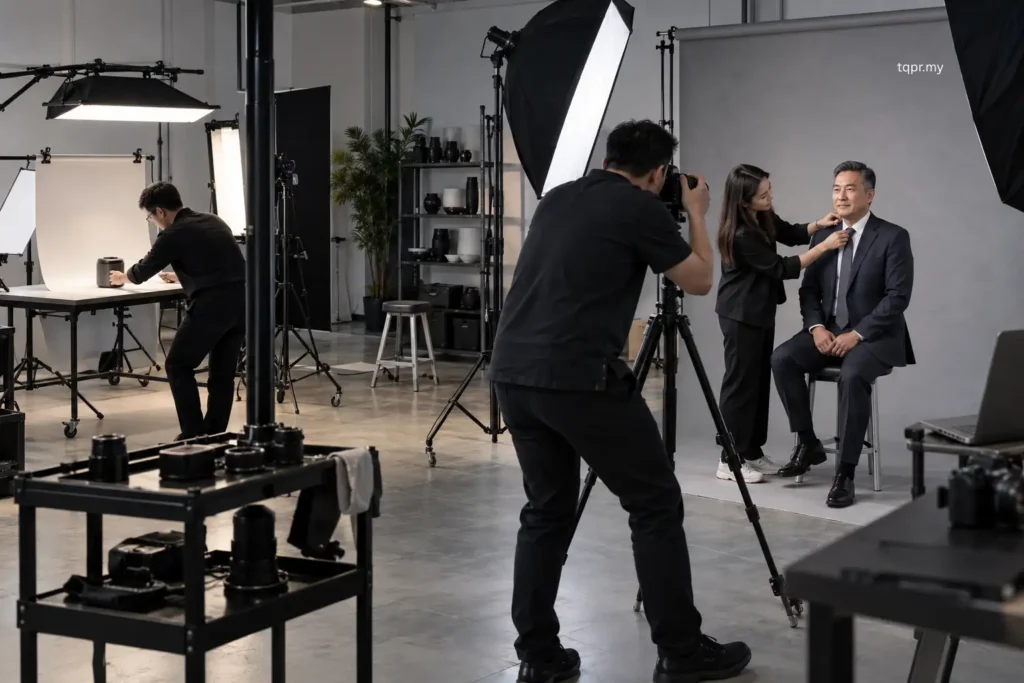
Strong visual assets can make the package substantially more usable, especially for digital, lifestyle, consumer, trade and event coverage.
Do not simply upload a folder called “Photos” containing files such as IMG_8472_final_final.jpg.
Each image should be easy to identify. A useful filename might look like:
company-product-launch-kuala-lumpur-01.jpg
Include a short document or metadata note explaining:
- Who or what appears in the image.
- Location, where relevant.
- Date, where relevant.
- Names and titles of identifiable people.
- Photographer or image credit.
- Whether the image is approved for editorial use.
Provide images large enough for publication. Where useful, include both landscape and portrait options because publication layouts differ.
For product stories, this may include clean product shots, lifestyle images and close-up details. For corporate announcements, it may include executive photographs, facilities, operations or relevant event images. For data-led stories, a chart or infographic may be more valuable than another corporate group photograph.
The visual should support the story, not merely fill the folder.
5. Logos and Brand Assets
Journalists and production teams may need an official logo, especially for digital stories, broadcast graphics, event coverage or business features.
The asset folder should usually provide:
- Primary logo.
- Reversed or light-background version if applicable.
- Transparent-background PNG.
- Vector format such as SVG or EPS where appropriate.
- Basic brand-name styling guidance.
- Short usage note if there are important restrictions.
Do not make the journalist search the public website, crop a logo from a PDF or use an old version found through image search.
The same principle applies to product marks, campaign logos or event branding. If an asset is likely to be published, provide the approved version directly.
Brand guidelines do not need to become a 60-page manual inside the media folder. A short note covering correct logo, spelling, capitalisation and prohibited outdated marks is often enough for editorial purposes.
6. Product, Service or Announcement Factsheet
A factsheet is one of the most useful ways to reduce ambiguity in the supporting materials.
It should distil the information that might otherwise be scattered across the press release, website, technical documents and internal presentation.
Depending on the announcement, it may include:
- Product or service name.
- What it does.
- Target users or customers.
- Launch or availability date.
- Pricing, if public.
- Key features or specifications.
- Distribution or market availability.
- Location details.
- Investment value, if confirmed and approved.
- Employment or capacity figures, if relevant.
- Partner organisations.
- Important dates or milestones.
- Regulatory or certification information where appropriate.
Use plain language. A factsheet should help a journalist verify details quickly, not require them to decode internal product terminology.
If the story involves a physical launch or media event, the factsheet can also support the briefing materials used on the day. TQPR’s event PR service in Malaysia reflects this wider connection between media handling, briefing materials, spokesperson preparation and event execution.
7. Supporting Data, Proof Points and Source Notes
Claims become more useful when the evidence is available.
If the story depends on research, market data, growth figures, customer numbers, environmental claims, performance improvements or survey results, include the underlying context a journalist would reasonably need to assess them.
For example:
- Sample size.
- Survey dates.
- Geography covered.
- Research methodology.
- Source organisation.
- Definition of key metrics.
- Comparison period.
- Whether the figure is audited, estimated or internally calculated.
If the company says demand increased by 40%, compared with what period? If a survey says Malaysians prefer one option, how many Malaysians were surveyed and how were they selected?
Do not use the media package to hide those details behind a headline statistic.
Cision’s 2026 State of the Media findings reported that journalists place value on original research, credible data, expert access and useful assets. The practical implication for communications teams is that evidence should be ready before outreach begins, especially if the pitch depends on a numerical claim.
This also protects the spokesperson. A leader who has the approved number but not its methodology can quickly become uncomfortable when a journalist asks where it came from.
8. A Media Q&A or Frequently Asked Questions Document
A Q&A is especially valuable when the announcement is complex, technical, sensitive or likely to trigger predictable follow-up questions.
The document might cover:
- Why is the organisation making this announcement now?
- How much does it cost?
- Who is affected?
- What changes for customers or stakeholders?
- What evidence supports the claim?
- Are there limitations?
- How does this differ from the previous version or approach?
- Who approved or regulates it?
- What happens next?
- Are there topics the organisation cannot discuss yet?
A useful Q&A does not exist to dodge difficult questions. It helps the communications team verify the likely questions, agree the facts and prepare clear answers before outreach starts.
For higher-risk announcements, the Q&A may need input from legal, regulatory, technical, HR, operations or leadership teams before it is approved. PR should help make the response understandable, but should not invent answers on behalf of the subject-matter owner.
If several spokespeople or markets are involved, a message house can help keep the underlying position consistent while allowing individual answers to remain natural.
9. Video, Audio, B-Roll or Other Multimedia
Not every story needs video. When it does, the kit should make the usable material obvious.
Potential multimedia assets include:
- Short product demonstration video.
- B-roll of a facility or event.
- Executive soundbite.
- Broadcast-ready interview clip.
- Audio pronunciation clip for an unusual name.
- Animation explaining a complex process.
- Data visualisation.
- Screen recording for a software product.
- Before-and-after visual where editorially appropriate and verifiable.
Keep file sizes, formats and access practical. If the full-resolution material is large, provide a preview and a clearly labelled download link.
Do not bury essential footage behind a sign-in process that a journalist cannot access quickly. Test every link before outreach begins.
Multimedia should also have context. A 30-second clip labelled video1.mp4 forces the recipient to investigate what they are looking at. A short description, filming date, location, names and usage information make the material much easier to assess.
10. Clear Media Contact Details and Access Information
Every media package should tell the journalist who to contact next.
Include:
- Media contact name.
- Role or organisation.
- Email address.
- Mobile number where appropriate.
- Availability or response expectations for time-sensitive launches.
- Interview booking instructions if needed.
- Link to the online newsroom or updated media folder.
For an event, add practical details such as:
- Venue.
- Registration or accreditation instructions.
- Arrival time.
- Parking or access information where relevant.
- Interview windows.
- Onsite media contact.
- Livestream or virtual-access details if applicable.
The contact should be someone who can actually help. A generic inbox that nobody checks during launch day weakens an otherwise strong kit.
Journalists may need a fact clarified, a photograph in another format, a spokesperson confirmed or a deadline accommodated. Media relations does not end when the kit is sent.
Should a Press Kit Be a PDF, Folder or Online Newsroom?
There is no single required format.
The best option depends on the size of the asset package, how often it changes and how the media are expected to access it.
| Format | Best for | Main limitation |
| Short summaries, backgrounders, event handouts | Weak for large image/video libraries and frequent updates | |
| Shared cloud folder | Launches with multiple downloadable assets | Permissions, folder structure and stale links must be managed carefully |
| Online newsroom | Ongoing media access and frequently updated corporate materials | Requires maintenance and clear website ownership |
| Dedicated landing page | A major announcement or campaign with multiple related resources | Can become outdated if it remains live without review |
| Email attachment | One or two small essential documents | Heavy attachments create clutter and can trigger delivery issues |
PRSA has recommended online newsrooms as a practical way to host press releases and multimedia without requiring reporters to manage large attachments. A well-built newsroom can also give journalists self-service access outside normal office hours.
For many Malaysian organisations, a hybrid approach works well:
- Send a concise, personalised pitch or invitation.
- Include the core release or announcement.
- Provide one clean link to the media folder or newsroom.
- Keep high-resolution assets downloadable from that link.
- Offer direct access to the media contact for questions and interviews.
The objective is accessibility, not technological sophistication.
Evergreen Press Kit vs Announcement-Specific Press Kit
One useful way to organise the materials is to separate what stays broadly relevant from what belongs to the current story.
Evergreen Press Kit
Maintain these materials throughout the year:
- Company backgrounder.
- Current leadership bios.
- Approved executive headshots.
- Logos and brand assets.
- Corporate factsheet.
- Key locations or market footprint.
- Media contact information.
- Recent major announcements.
Announcement-Specific Press Kit
Add the materials needed for the current campaign:
- New press release.
- Product or event factsheet.
- Current pricing or availability.
- Campaign-specific visuals.
- New research data.
- Relevant Q&A.
- Spokesperson quote sheet.
- Event details.
- Demo video or B-roll.
This split reduces duplication and makes updates more manageable. A company launching three products in a year should not recreate its corporate history and logo pack from scratch every time.
How to Organise a Press Kit So Journalists Can Actually Use It
A strong kit can still fail if the folder is chaotic.
Use a Simple Folder Structure
For example:
01 – Press Release
02 – Company Background
03 – Factsheet
04 – Spokespeople
05 – Images
06 – Video
07 – Logos
08 – Q&A
09 – Data & Methodology
10 – Media Contact
Numbering the folders keeps them in a logical order and reduces the time required to find key materials.
Use Descriptive File Names
Avoid:
- final.pdf
- final2.pdf
- CEO new.jpg
- DSC00182.jpg
- media kit latest REAL.zip
Prefer:
- company-product-launch-press-release-2026.pdf
- company-backgrounder-malaysia-2026.pdf
- ceo-firstname-lastname-headshot.jpg
- product-name-front-view-high-res.jpg
Put the Most Important Information First
A journalist should not need to browse 30 assets before understanding the announcement.
The pitch, release, one-page factsheet and media contact should make the story clear. Additional background can sit behind them.
Check Permissions Before Sending
Open the link from a device or browser that is not logged into the company account. If it asks for access, the journalist may face the same problem.
Also check whether the download expires, whether files can be downloaded rather than merely previewed, and whether the folder exposes confidential internal documents.
Keep the File Sizes Sensible
Provide high-resolution material, but do not force every journalist to download several gigabytes simply to identify one image.
Where necessary, provide web-resolution previews plus a separate high-resolution folder.
Should a Press Kit Be Bilingual in Malaysia?
Not every kit needs every asset translated into every language. The decision should reflect the media list, target audience and importance of the announcement.
For Malaysian outreach, English and Bahasa Malaysia materials may both be useful when the target media mix includes outlets or desks that work primarily in different languages. Mandarin or other language support may also be relevant for specific outlets, audiences or campaigns.
Do not translate mechanically just to say the kit is multilingual. The translated material should preserve the facts, naming conventions, figures and approved meaning of the source version.
A practical approach is to prioritise the materials most likely to be used:
- Press release.
- One-page factsheet.
- Key executive quote.
- Event information.
- Media contact details.
Then prepare additional translated background if the target media genuinely need it.
The media list should guide this decision. A broad assumption about “Malaysian media” is less useful than knowing which outlets, desks and journalists the campaign is actually targeting.
What Should Not Go Into a Press Kit?
More material is not automatically better.
Avoid filling the kit with content that creates confusion, risk or unnecessary work.
Unverified Marketing Claims
Claims such as “Malaysia’s number one”, “the most advanced”, “market-leading” or “revolutionary” should not appear merely because they sound strong.
If the claim is important, confirm what evidence supports it and whether the wording can withstand scrutiny.
Confidential Internal Documents
Do not upload internal decks, sales forecasts, private customer details, unreleased financial information or unapproved strategy documents simply because they contain useful background.
Prepare a media-facing version instead.
Outdated Materials
Remove:
- Former executive bios.
- Expired pricing.
- Old logos.
- Outdated product specifications.
- Statistics with no current source.
- Event schedules from previous years.
Excessive Brochures
A journalist normally does not need the same material used for a sales roadshow.
If a brochure contains one useful chart, extract or reproduce the approved chart rather than expecting the journalist to search through 40 pages.
Dozens of Nearly Identical Images
Curate the strongest options. Ten clearly labelled photographs are usually easier to work with than 150 unfiltered event shots.
Material That Contradicts the Approved Message
Before distribution, cross-check the release, Q&A, factsheet, website, spokesperson brief and visuals. Conflicting figures or terminology create unnecessary questions.
When Should You Prepare the Press Kit?
Do not start assembling the materials after the announcement has already gone out.
For a planned launch, begin once the core story, approved facts and media strategy are sufficiently clear.
The team may need time for:
- Copywriting and approvals.
- Translation.
- Photography.
- Executive headshots.
- Data verification.
- Legal or regulatory review.
- Design or infographic production.
- Video editing.
- Spokesperson preparation.
- Uploading and permission testing.
The deadline should work backwards from the media outreach date, not the public launch date.
If journalists will receive the story under embargo or be invited to a briefing before launch, the kit may need to be ready earlier than the public website update.
How Often Should a Press Kit Be Updated?
Review the evergreen kit at least whenever a material fact changes.
Triggers include:
- Leadership changes.
- Rebranding.
- New logo or naming rules.
- New market entry.
- Major product updates.
- Changed pricing or availability.
- New verified company statistics.
- Office relocation.
- Changed media contacts.
For organisations that receive regular media enquiries, a scheduled quarterly review can help catch stale information before it causes problems.
Announcement-specific kits should also be archived carefully. Keeping a dated copy can help the communications team confirm exactly what information and assets were shared at the time.
How Does a Press Kit Fit Into Media Outreach?
A media kit is support material. It is not a substitute for a relevant pitch.
Journalists still need a reason to care about the story.
The outreach process should normally answer three different questions:
- Why this journalist? The story fits their beat, audience or current coverage.
- Why this story now? There is a genuine news hook, new evidence, useful expert or timely development.
- Can they cover it efficiently? The supporting materials provide verified information, assets and access.
The media list therefore comes first strategically. A perfect kit sent to irrelevant contacts is still irrelevant outreach.
If your team is building that targeting process, TQPR’s guide to building a media list in Malaysia can support the next step once that article is live. Until then, link directly to TQPR’s media relations service rather than to an unpublished draft.
A good media package increases usability. Good media relations still depends on story judgement, targeting, timing, relationships and follow-through.
Press Kit Checklist Before You Send It
Before the first journalist receives the materials, confirm:
- The main announcement is accurate and approved.
- Names and job titles are correct.
- Company facts match the current website and official records.
- All statistics include enough context to understand them.
- Spokespeople are confirmed and available.
- Images are high resolution and clearly labelled.
- Captions and photo credits are included where needed.
- Logos are current.
- Product specifications and pricing are current.
- The Q&A reflects likely follow-up questions.
- Confidential files have been removed.
- All links work without internal login access.
- Download permissions have been tested.
- The media contact is correct and available.
- Translation has been checked for factual consistency.
- The folder structure is easy to understand.
If the kit passes those checks, it is far more likely to function as intended: a useful working resource for media rather than another corporate attachment.
Frequently Asked Questions About Press Kits
What is the difference between a press kit and a media kit?
In PR, the terms are often used interchangeably to describe a package of information and assets for journalists. However, “media kit” can also refer to advertising information such as audience profiles, rate cards and sponsorship opportunities. Context matters.
Does every company need a press kit?
Any organisation that receives media enquiries or runs active media outreach can benefit from maintaining core media-ready assets. Smaller companies may only need a simple backgrounder, logos, photographs, spokesperson information and media contact, while larger organisations may maintain a full online newsroom.
Should the press release be inside the press kit?
For a specific announcement, yes. The press release or core news document should normally be easy to find within the kit. It gives the journalist the essential facts before they explore the supporting materials.
Should I send the entire press kit as an email attachment?
Usually not if the package contains multiple high-resolution images, videos or large documents. A concise email with a reliable link to the media folder or newsroom is often easier to manage and less likely to create delivery problems.
How many images should a press kit include?
There is no fixed number. Include enough variety to support likely editorial needs without overwhelming the journalist. A curated set of strong, clearly labelled images is normally more useful than an unfiltered folder of hundreds of files.
Should a Malaysian press kit be in English and Bahasa Malaysia?
It depends on the target media. Bilingual materials can be useful for campaigns reaching both English- and Bahasa Malaysia-language outlets, but the media list should determine what needs translation. Accuracy matters more than translating every asset automatically.
Can I include customer testimonials in a press kit?
You can where they are relevant, approved and properly attributed, but they should not replace independent evidence or factual background. For most news stories, verified data, case information, expert access and usable assets will be more important.
Who should manage and update the press kit?
Responsibility usually sits with the communications, PR or media-relations team, with input from relevant subject-matter owners. One person should be accountable for maintaining the latest approved version so journalists do not receive conflicting materials.
Build a Press Kit That Makes the Story Easier to Cover
A useful media package is not the biggest folder your organisation can assemble. It is the clearest package of verified information and media-ready assets needed for the story in front of you.
Start with the journalist’s likely questions. Make the core announcement easy to understand, give them the proof and context needed to verify it, provide usable visuals and spokespeople, and make sure there is a real person available when follow-up questions arrive.
If your organisation is preparing a launch, announcement, media briefing or ongoing press office programme, contact TQPR Malaysia to discuss the media materials, outreach approach and spokesperson preparation needed to support it.