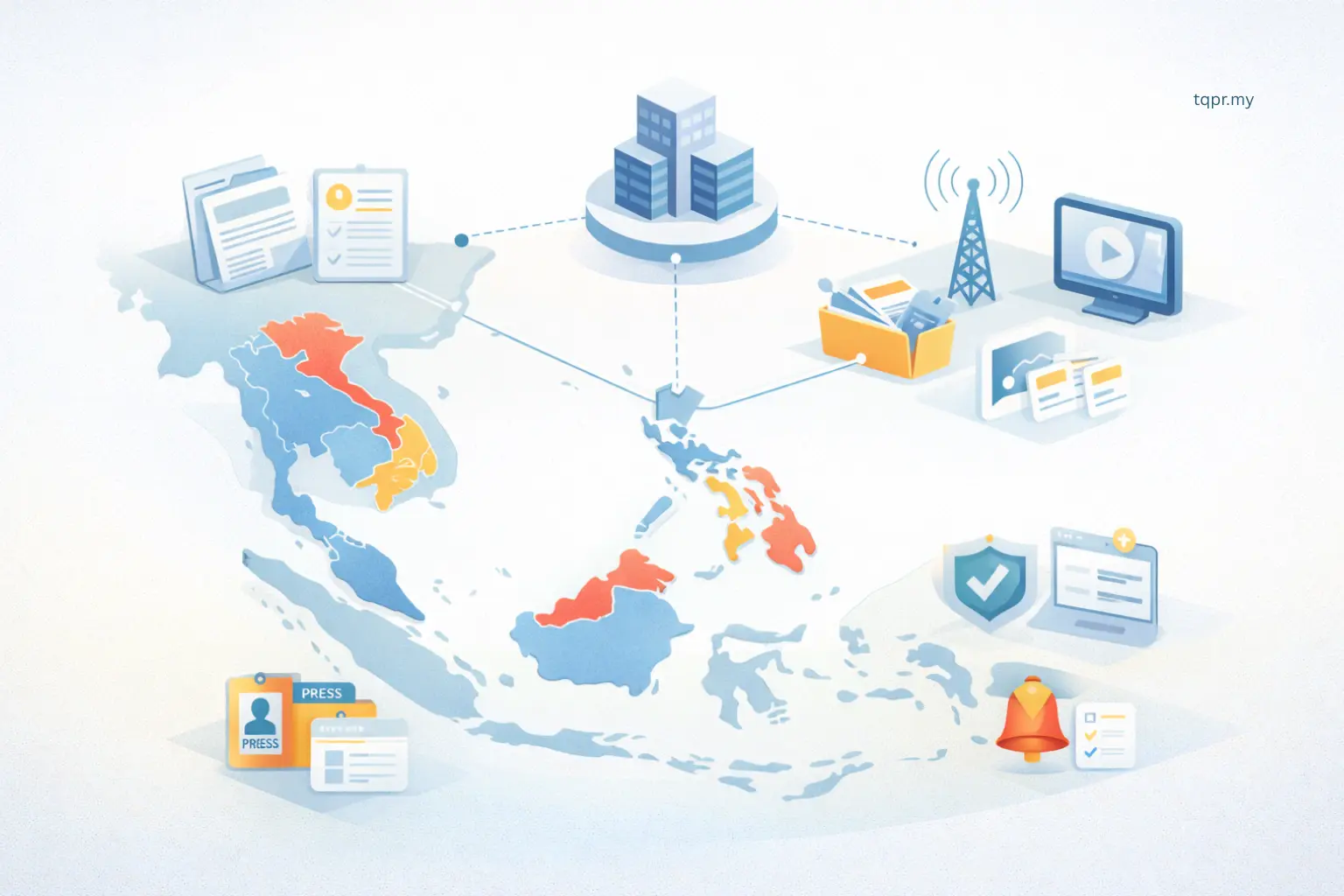
If a crisis hits in Malaysia, the first 24 hours decides whether it stays contained or turns into a reputation spiral. Your goal is simple: protect people, stabilise operations, verify facts fast, and communicate clearly through one command structure and one spokesperson voice. If you need the Malaysia media and language landscape first, start with our PR in Malaysia field guide. This checklist is a practical crisis communications in Malaysia playbook you can run with issues and crisis training/management the moment something happens.
Crisis Communications in Malaysia: Key Takeaways
- Lock command fast: activate the Crisis Response Team, assign roles, and enforce one approvals path.
- Prioritise life safety first, then stabilisation, then business restoration.
- Verify facts quickly using ops logs, CCTV, and witnesses before public statements.
- Deploy a First Communications Pack by Hour 2 to 4: holding statement, internal note, media reply template.
- Monitor Malay and English channels hourly, correct misinformation with facts, and publish timestamped updates.
First 60 Minutes: Malaysia Crisis Communications Priorities
In the first hour, you are not “doing PR”. You are doing crisis control with crisis communications in Malaysia running in parallel.
Do this immediately
- Activate the Crisis Response Team
- Incident Commander (decision authority)
- Communications Lead (owns crisis communications + PR in Malaysia)
- Legal Liaison (review and regulatory guidance)
- Operations Lead (facts, safety, containment)
- Customer Lead (frontline scripts, escalation)
- Open one approvals channel
Create one dedicated channel (WhatsApp, Signal, Teams) for approvals only. No side chats. Every outbound message gets routed here and logged.
- Set the first message rule
One spokesperson externally. Everyone else says: “Please refer to our official update page / communications team.”
- Start your timeline log
Timestamp every decision, every fact confirmation, every message sent. This becomes your audit trail.
Hour 1 to 2: Fact Verification and Risk Assessment in Malaysia
This is where most teams mess up. They publish too early, then spend 48 hours walking things back.
Fact verification checklist
- Confirm: what happened, when, where, who is affected, what is being done right now
- Validate sources: ops lead, security, CCTV, logs, on-site supervisor, vendor logs (if relevant)
- Separate: confirmed facts vs unknowns vs rumours
- Preserve evidence: copies of CCTV clips, photos, system logs, witness notes, and chain of custody
Rapid risk assessment
- Safety risk: ongoing or contained?
- Service impact: which sites, which customers, which regions in Malaysia?
- Legal or regulatory touchpoints: do you have notification duties (industry specific)?
- Reputational triggers: allegations, discrimination, public safety fears, misinformation themes
Output of Hour 1 to 2 should be a short internal “Verified Facts” note, not a long report.
Hour 2 to 4: Build the First Communications Pack (Templates)
By Hour 2 to 4, you need a small kit that lets you respond consistently across press, customers, partners, and internal teams.
1) Holding Statement (Malay and English versions)
Keep it short, factual, and safe. No speculation. No blaming.
Holding statement template (English)
“We are aware of an incident involving [what/where]. Our team is responding and we are working to confirm details. Safety is our priority. We will share an update by [time] via [official channel].”
Holding statement template (Bahasa Malaysia)
“Kami maklum mengenai insiden melibatkan [apa/di mana]. Pasukan kami sedang mengambil tindakan dan sedang mengesahkan maklumat. Keselamatan adalah keutamaan kami. Kami akan kemas kini sebelum [masa] melalui [saluran rasmi].”
For newsroom-friendly structure and wording discipline, use our press release Malaysia checklist.
2) Internal note to staff (one page)
Include:
- Verified facts (only)
- What staff should say (one approved line)
- Who handles enquiries (name, number, email)
- Social media instruction: “Do not comment or share unofficial info”
- Escalation steps: customer anger, media calls, regulator contact
3) Media reply template (for journalists)
Media reply template
“Thanks for reaching out. Here is what we can confirm as of [time]: [facts]. Our priority is [safety/containment/support]. We will provide the next update by [time] on [link]. For further questions, please contact [name, role, phone/email].”
Version control matters. Put “v1, v2” and timestamps. This is basic crisis communications in Malaysia hygiene.
Hour 4 to 12: Notify Stakeholders by Channel (Malaysia)
Now you move from building the kit to using it. In crisis communications in Malaysia, sequence matters.
Regulators (if applicable)
Use secure channels. Stick to verified facts and actions taken. Log who was informed and when.
Partners and vendors
Direct call first for key partners, then follow-up email with the same verified facts and next update timing.
Customers
Use the channels customers already trust:
- Website banner or status page
- Email or in-app notice (if relevant)
- WhatsApp or SMS for urgent safety or service disruption messages
Customer update structure
- What happened (verified)
- Who is affected
- What to do now
- What you are doing
- When the next update will come
Media
If the media is already covering it, you may need a short statement plus a scheduled briefing window later, but only if you have verified details and a prepared spokesperson. If you decide to brief media live, choose the format using PR format in Malaysia.
Hours 12 to 24: Monitoring, Misinformation, and Transparency Updates
This is where crisis PR Malaysia becomes constant monitoring and correction.
Monitoring routine (hourly)
- Track mentions and keywords in English and Bahasa Malaysia using business intel, media monitoring and reporting
- Watch Facebook, TikTok, X, Instagram, and major news portals
- Identify misinformation themes, screenshots, edited videos, fake statements
- Prioritise corrections where the reach is highest and the risk is highest
- Correct misinformation with facts, and keep updates aligned with local content standards where relevant.
Correction rule
Correct facts, not emotions. Do not argue. Do not dunk on commenters. Do not repeat false claims in detail.
Update cadence
Post short updates with timestamps, even if the update is “no new confirmed details yet, next update at X”.
24-Hour Transition Plan (What you hand leadership)
By the end of the first day, you should produce a concise crisis communications in Malaysia transition note:
- What is confirmed
- What has been done
- What risks remain
- What the next 24 to 72 hours plan is
- Who is responsible for each workstream
- What the public update cadence will be
To report progress cleanly, use our Public Relations KPIs in Malaysia guide.
This is also where you start planning remediation messaging: what you are fixing, how you support affected people, and what prevention steps are being introduced.
First 24 Hours Crisis FAQ (Malaysia)
What are the 5 C’s of crisis communication?
A common way to frame early crisis communications is: Concern, Clarity, Control, Confidence, Competence. In practice: acknowledge impact, speak plainly, show action, stay steady, and prove capability.
What are the 5 P’s of crisis management?
A useful lifecycle is: Prevention, Preparation, Promptness, Performance, Post-crisis. The first 24 hours sits heavily in promptness and performance.
What is the role of PR in crisis communication in Malaysia?
Crisis PR Malaysia is not “spin”. It is message discipline and stakeholder coordination. PR leads the holding statement, spokesperson control, media handling, update cadence, misinformation correction, and documentation so the response stays consistent and credible.
What is a realistic first statement in the first hour?
A short holding statement that acknowledges the situation, prioritises safety, confirms you are verifying details, and states when the next update will be provided.
Final Word: Crisis Communications in Malaysia (First 24 Hours)
In Malaysia, crisis communications and public relations works best when you do the boring basics well: one command structure, one approvals channel, one spokesperson voice, fast fact verification, and consistent updates in English and Bahasa Malaysia. If you follow this first 24 hours checklist, you reduce speculation, protect trust, and give your operations team room to actually fix the problem.
If you want this operationalised into a ready-to-run pack for your team, talk to a Malaysia crisis communications team.