A press conference can create a valuable shared news moment, give journalists direct access to decision-makers and produce strong visual material. It can also expose a weak announcement, consume a significant budget and leave an organisation facing difficult questions in front of an underfilled room.
For Malaysian businesses, the right question is not simply whether a press conference looks impressive. The question is whether the announcement genuinely needs multiple journalists, live access, a formal stage and real-time questions at the same moment.
If the answer is no, a smaller media briefing, targeted interview, press release or digital update may deliver a better result with less operational and reputational risk. This guide applies six practical tests to help communications teams choose confidently before invitations are sent and expectations are set.
Key takeaways
- Hold a press conference only when the news is significant enough to justify journalists travelling and attending at a fixed time.
- A media briefing is usually smaller, more focused and more conversational, while a formal press conference creates a wider public news moment.
- Live questions are part of the value, not an inconvenience to be controlled out of the programme.
- Strong visuals, demonstrations or several authoritative speakers can strengthen the case for an in-person event.
- A press conference requires approved facts, trained spokespeople, media materials, logistics and a follow-up plan.
- If the announcement can be understood fully from a release and one interview, a large media event may be unnecessary.
What is a press conference?
A press conference is a formal media event at which an organisation makes a significant announcement to several journalists at the same time, normally followed by an open question-and-answer session. It may involve one or more senior spokespeople, prepared remarks, supporting visuals, a demonstration and opportunities for interviews after the formal programme.
The University of Kansas Community Tool Box guide to arranging a press conference describes it as a format designed to generate timely, significant and relevant hard news. It also treats the format as an additional media technique for special occasions, rather than a routine substitute for press releases and direct media contact.
That distinction matters. A hotel ballroom, branded backdrop and row of microphones do not make an announcement newsworthy. The substance must justify the format.
Press conference vs media briefing: what is the difference?
The terms are sometimes used interchangeably, but the scale, purpose and expectations are different.
| Consideration | Press conference | Media briefing |
| Main purpose | Create a formal, shared news moment | Explain a subject or provide focused context |
| Typical audience | A wider group of relevant media | A smaller, selected group of journalists |
| Format | Prepared announcement followed by open Q&A | Short introduction followed by deeper discussion |
| Spokespeople | Senior leaders, partners or subject experts | One or two relevant spokespeople or specialists |
| Production | Venue, staging, audio, visuals and press operations | Meeting room, roundtable or virtual call |
| Best suited to | Major launches, partnerships, milestones, policy responses or high-interest developments | Technical subjects, previews, background explanations or relationship building |
| Main risk | Low turnout or uncontrolled public questioning | Limited reach or inconsistent understanding across separate sessions |
A media briefing may still be on the record and may still generate coverage. It is simply designed for depth and access rather than spectacle. A briefing can also be held virtually or as a small roundtable when the topic is important to a specific media segment but does not warrant a broad event.
For a wider comparison of press events, virtual sessions and individual interviews, see TQPR’s guide to choosing a PR format in Malaysia. This article focuses on the narrower decision of whether a formal press conference is justified.
Test 1: Is the announcement genuinely significant?
The first test is the hardest and the most important. Would a relevant journalist consider the announcement meaningful to their audience today?
News significance can come from several sources:
- A major product, facility or market launch with a clear local impact
- A substantial investment, partnership, acquisition or expansion
- New data that changes understanding of an industry or public issue
- A senior leadership decision with consequences for customers, employees or investors
- A development involving several credible organisations or public figures
- A timely response to an issue attracting intense public or media attention
- A demonstration that cannot be understood properly through text or images alone
An internal milestone, minor product update or ceremonial signing may be important to the organisation without being important enough for a press conference. If the strongest angle is simply that the company is pleased to announce something, the format is probably too large for the story.
Ask three questions before proceeding:
- What changes for the public, customers, industry or market because of this announcement?
- Why does the information matter now?
- What can journalists obtain by attending that they cannot get from an emailed release?
If the team cannot answer all three in plain language, strengthen the story or choose a more proportionate format. TQPR’s media relations support in Malaysia begins with the editorial value of the story, target journalists and desired outcome, not the size of the room.
Test 2: Do several journalists need access at the same time?
A press conference is useful when many relevant journalists need equal access to the same announcement, spokespeople and evidence. This may apply when information is market-sensitive, public-facing, highly anticipated or likely to prompt similar questions across different outlets.
Simultaneous access can help an organisation:
- Release important information consistently
- Allow several newsrooms to question the same decision-makers
- Reduce confusion caused by fragmented explanations
- Give broadcast, print, online and trade media access to common assets
- Make follow-up interviews available within a controlled period
However, a broad invitation list is not automatically better. Twenty loosely relevant attendees may create less useful coverage than six well-selected journalists who understand the subject and reach the right audiences.
Consider the realistic media pool. If the story matters only to one specialist trade publication, two business journalists or a single broadcast programme, targeted briefings may produce stronger reporting. If different media segments need different levels of detail, a short shared announcement followed by specialist breakouts may be more effective than one long public session.
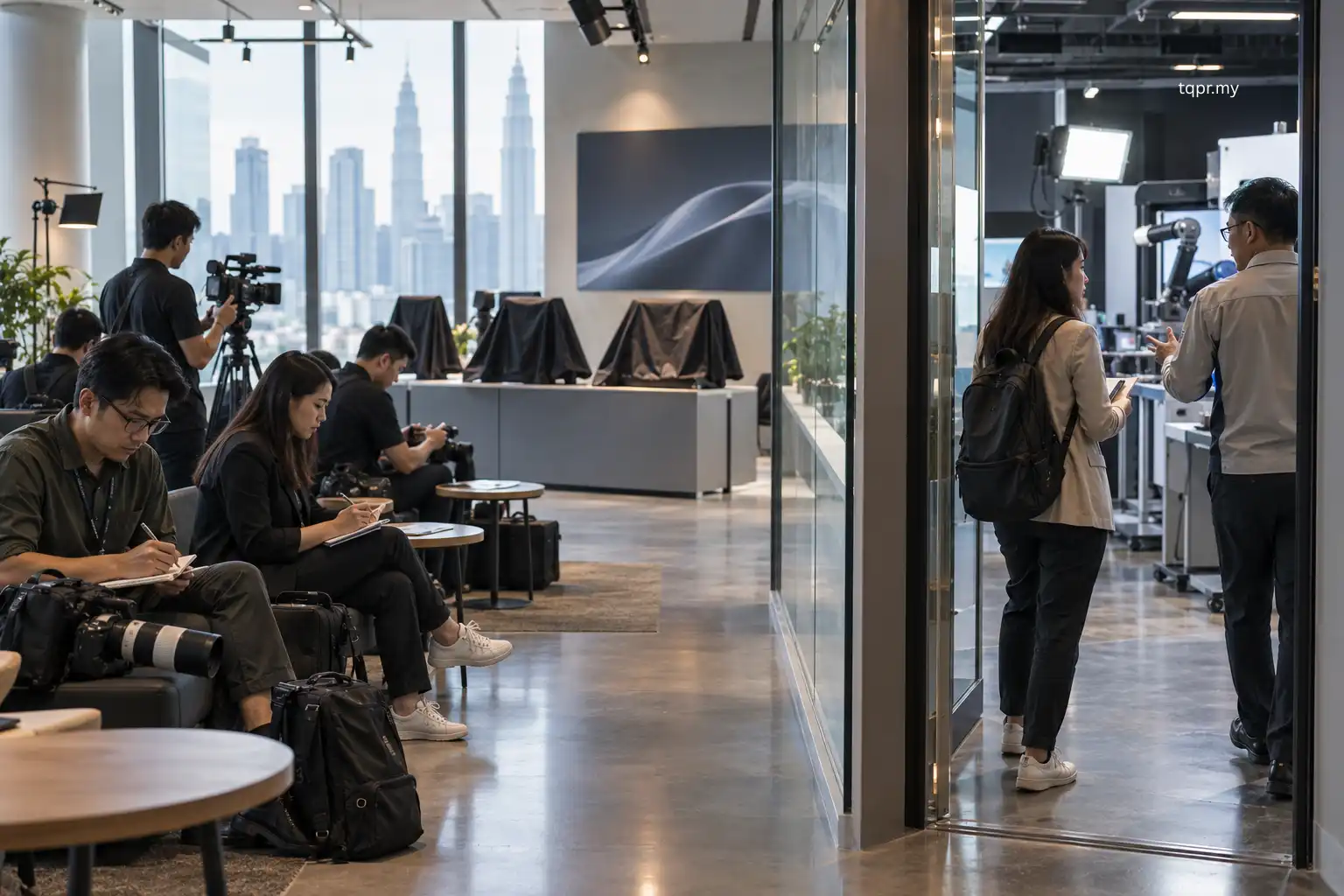
The decision should also reflect geography. A Kuala Lumpur venue may be convenient for many national newsrooms but less accessible to journalists based elsewhere in Peninsular Malaysia, Sabah or Sarawak. Virtual access, a livestream or recorded assets can extend reach, but these elements require the same care as the physical event.
Test 3: Is live Q&A necessary and manageable?
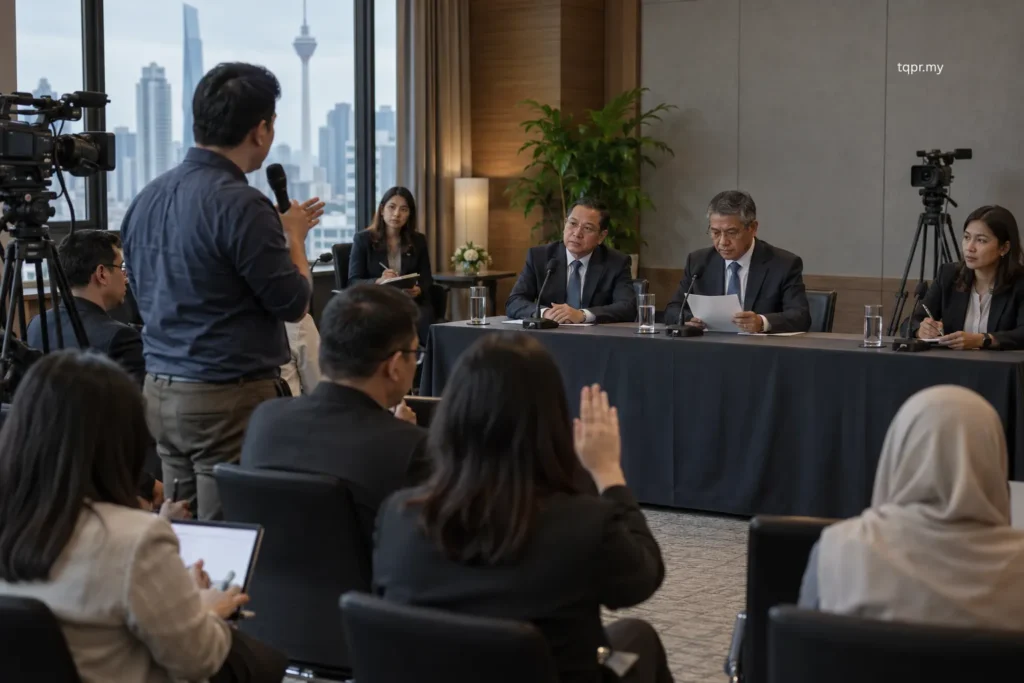
Live questions are a central reason to hold a press conference. Journalists can test the announcement, clarify gaps and hear how leaders respond without layers of written approval. That access can strengthen credibility, particularly when the subject is complex or consequential.
It also creates risk. A spokesperson may face questions about pricing, delays, competitors, regulation, employment, previous controversies or subjects beyond the planned announcement. Saying that a topic is not on the agenda will not necessarily stop the question from being asked or reported.
Before choosing the format, assess whether the organisation can:
- Answer the most likely difficult questions accurately
- Distinguish confirmed facts from information that is still developing
- Explain sensitive decisions without speculation
- Keep several spokespeople aligned on facts and terminology
- Correct a false premise calmly without becoming defensive
- Commit to following up when an answer is not immediately available
The objective is not to script every sentence. It is to create enough preparation that the spokesperson can answer naturally without contradicting the organisation’s approved position.
A concise message house strategy can align the main message, supporting proof points and audience concerns. For high-stakes announcements, practical spokesperson media training should include hostile, technical and unexpected questions under realistic pressure.
If leaders want the visibility of a press conference but will not permit meaningful questions, choose another format. A prepared video, statement, press release or controlled presentation may be more honest about the level of access being offered.
Test 4: Does the story benefit from a physical setting or visual proof?
Some announcements become clearer and more compelling when journalists can see, hear or experience them directly. A press conference can be strengthened by:
- A working product demonstration
- A tour of a new facility or operational site
- A signing involving credible partners
- Physical evidence, prototypes, research displays or data visualisation
- Access to several experts or affected stakeholders
- Strong broadcast and photography opportunities
The setting should serve the story. A factory opening may be more credible at the facility than in a city hotel. A mobility launch may need a safe demonstration area. A healthcare or technology announcement may require expert stations where journalists can ask detailed questions after the formal session.
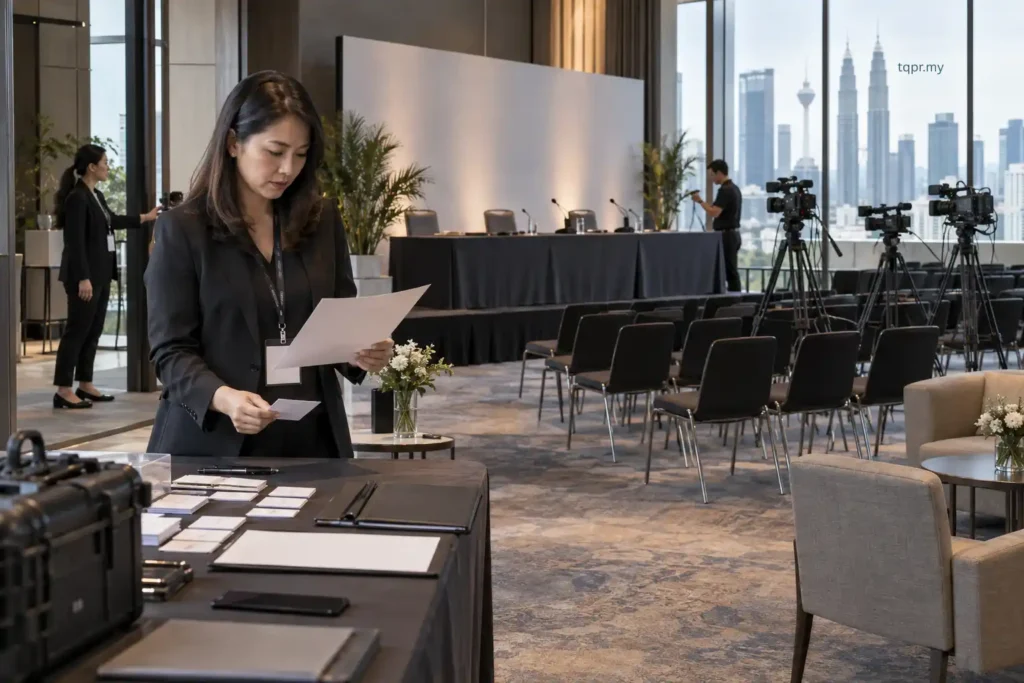
Visual planning must also be practical. Check lighting, sound, backdrop placement, camera positions, electrical supply, internet capacity and room acoustics. Avoid locations where construction, traffic or public access will disrupt interviews. Provide a clear point of contact for technical crews and confirm whether filming is allowed in every area.
Columbia Business School’s guide to managing media at events recommends assessing media value before inviting press, securing speaker consent, coordinating photography and filming needs, managing check-in and preparing for unexpected questions. These are useful controls for corporate events as well.
If there is no meaningful visual or access advantage, do not create artificial theatre. A well-run online briefing can be more useful than asking journalists to cross Kuala Lumpur for a slide presentation they could have viewed from their desks.
Test 5: Are the facts, people and materials ready?
A press conference creates a fixed deadline. By the time media arrive, the organisation needs more than an approved speech.
Message readiness
The team should agree on one clear announcement, why it matters and the evidence supporting it. Claims, figures, names, dates and comparisons must be checked. If several partners are involved, terminology and responsibilities should be aligned before any public communication.
Spokesperson readiness
Each spokesperson should have a defined role. One person may explain the business decision, another the technical details and another the local market impact. Too many speakers can dilute the news and lengthen the programme. Seniority helps only when the person can answer relevant questions confidently.
Media material readiness
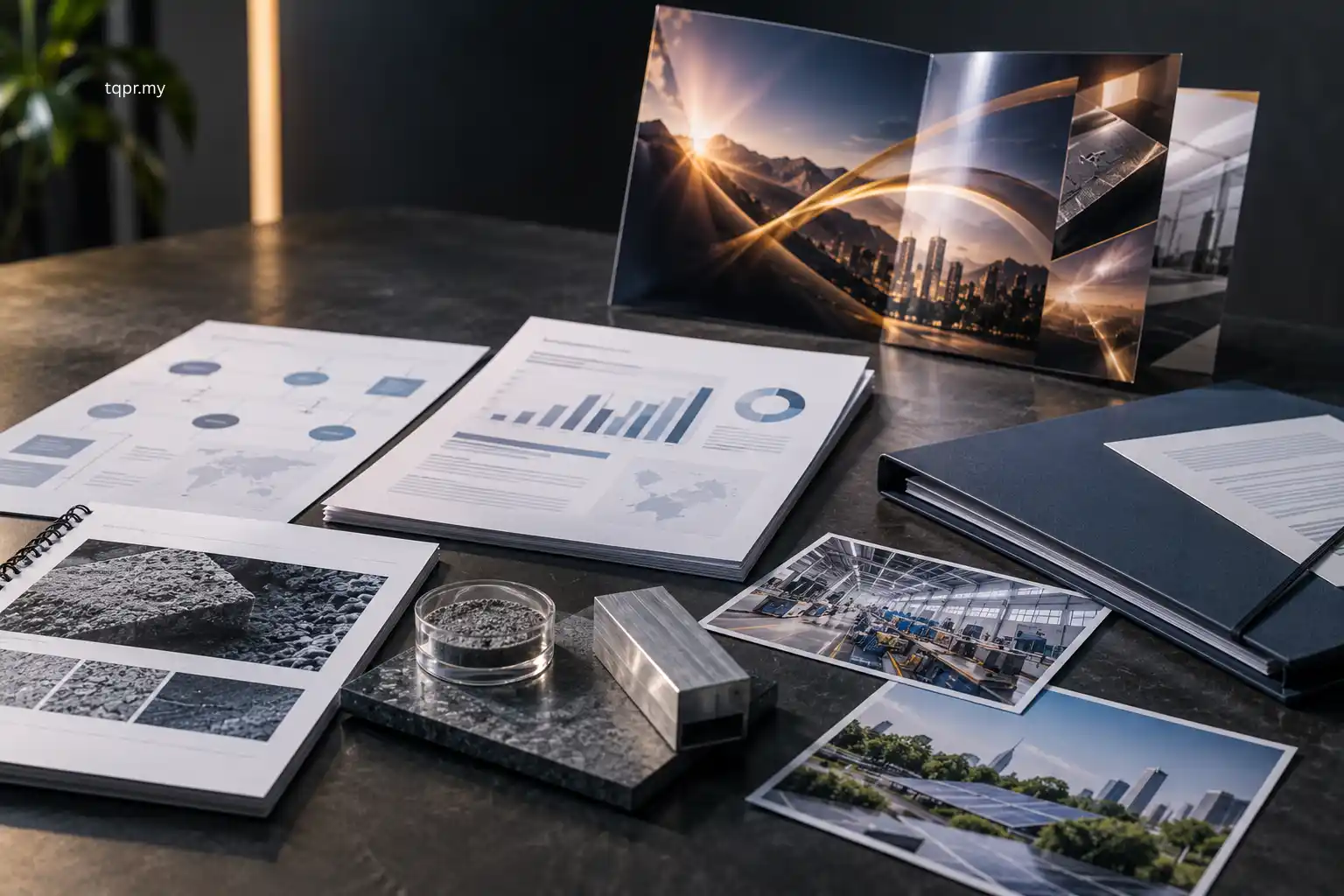
Journalists should receive materials that make accurate reporting easier, including:
- A concise press release
- A fact sheet or backgrounder
- Spokesperson names and biographies
- Approved data and source notes
- High-resolution images, logos and captions
- Presentation slides or key charts where relevant
- Product, venue or demonstration information
- Media contact details for follow-up
Good PR copywriting in Malaysia should make the facts easy to verify and quote without burying the announcement in promotional language.
Operational readiness
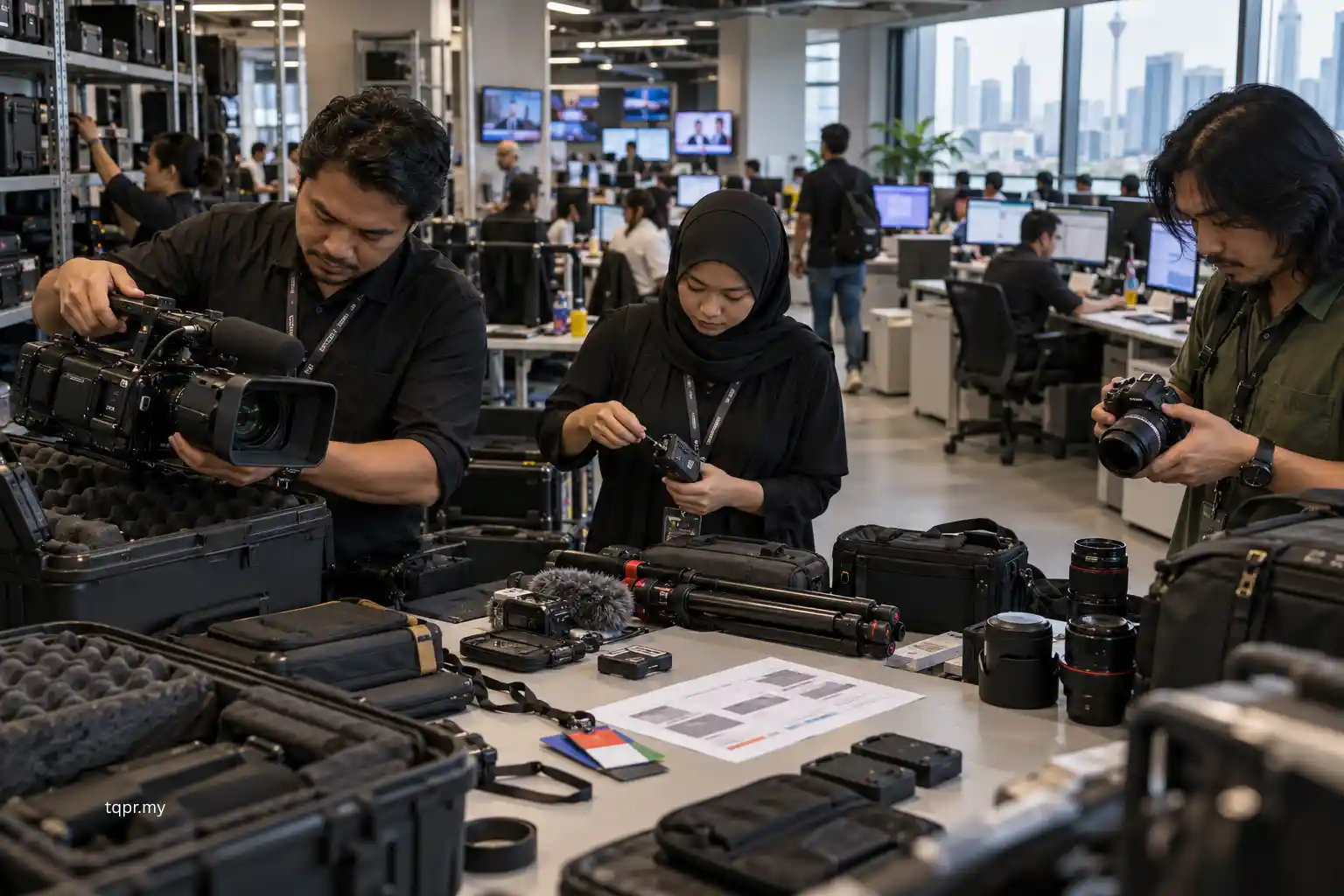
Confirm the venue, invitations, registration, access, security, signage, staging, microphones, recording, photography, timing and media holding areas. Test the presentation, videos, remote connections and backup files. If the session is hybrid, assign someone to monitor online questions and provide technical support.
One unresolved approval can affect every other element. If a core fact, legal position, partner commitment or spokesperson is still uncertain, postpone the invitation rather than trying to solve it after media have committed to attend.
Test 6: Can the organisation justify the cost and attendance risk?
Every press conference competes with breaking news, newsroom deadlines, other events and journalists’ limited time. An invitation does not guarantee attendance, and attendance does not guarantee favourable or extensive coverage.
Calculate the total commitment, not just the room rental. Costs may include venue production, audio-visual support, photography, video, livestreaming, design, translation, travel, security, catering, media materials, staffing and post-event distribution. Senior management time and the opportunity cost for journalists also matter.
Then define success before approving the format. Useful objectives could include:
- Accurate coverage in priority media
- Strong message pull-through
- Quality interviews with relevant spokespeople
- Broadcast-ready visual assets
- Clarification of a complex issue
- Engagement from a specialist media segment
- Follow-up interest from journalists who could not attend
Do not measure success by the number of chairs filled alone. Ten relevant journalists who publish accurate, substantive stories can be more valuable than a crowded room of guests with little editorial influence.
An experienced event PR agency in Malaysia should challenge whether the event is necessary, build a realistic target list and connect onsite execution to media outcomes. The recommendation may be a smaller briefing or staged rollout rather than a large event.
Which communication format should you choose?
Use the smallest format that can achieve the communications objective without reducing necessary access or clarity.
| Situation | Best starting format | Why |
| Major announcement with broad public impact and several senior decision-makers | Press conference | Creates simultaneous access, formal accountability and shared assets |
| Complex topic relevant to a small group of specialist journalists | Media briefing or roundtable | Allows detailed discussion without unnecessary production |
| Strong story requiring one authoritative voice | Targeted one-on-one interviews | Gives selected outlets time to explore the subject deeply |
| Straightforward factual update | Press release with media follow-up | Delivers information efficiently without requiring attendance |
| Visual product, site or demonstration | Media event with briefing component | Lets journalists experience the evidence and ask practical questions |
| Sensitive developing issue | Holding statement plus controlled updates | Prioritises accuracy and speed while facts continue to emerge |
| Regional story with dispersed journalists | Virtual briefing or hybrid session | Improves access while retaining live questions |
The formats can also be combined. For example, an organisation might issue a release under embargo, conduct a short media briefing for specialist reporters, hold a product demonstration and arrange selected executive interviews. The correct sequence depends on the news, audiences and operational constraints.
When should you not hold a press conference?
Do not hold one simply because senior management expects a visible event or a partner wants a ceremonial stage. Reconsider the format when:
- The announcement is primarily promotional and lacks a credible news angle
- The information is relevant only to a narrow audience
- Spokespeople are unwilling or unable to answer reasonable questions
- Important facts, approvals or partner positions are unresolved
- The team expects journalists to attend mainly because of gifts or hospitality
- The event offers no additional access, evidence or visual value
- A release, briefing or interview can communicate the story more effectively
- The timing conflicts with major news, public holidays or newsroom pressures
A low-turnout press conference does more than waste budget. It can signal that the organisation misjudged its relevance. Empty seats can affect leadership confidence, partner relationships and the tone of internal discussions about PR performance.
Cancel or resize early if media feedback is consistently weak. Moving from a ballroom to a focused roundtable is not a failure. It is evidence that the team is responding to editorial reality.
Malaysia-specific planning considerations
Media operations in Malaysia require local judgement. A regional plan copied directly into Kuala Lumpur may miss language, timing, travel and newsroom factors that affect attendance and coverage.
Language and materials
Decide whether the event and media materials need English, Bahasa Malaysia, Mandarin or another language based on the announcement and target outlets. Spokespeople do not need to deliver every answer in every language, but the team should know who can support follow-up and how translations will be checked.
Timing and calendar
Review public holidays, festive periods, parliamentary or major government announcements, industry events and competing brand launches. Consider Friday prayers and travel time when setting the programme. Ask priority journalists what timing is workable instead of relying on a universal rule.
Location and access
Choose a location that supports the story and is realistic for the intended media. Confirm parking, public transport, security registration and loading access for broadcast crews. If the announcement matters beyond the Klang Valley, plan how regional media will receive equivalent information and access.
Local spokesperson relevance
Regional executives can provide authority, but Malaysian media may also need a local leader who can explain domestic implications, pricing, availability, employment, partnerships or regulation. Align both speakers so the global narrative and local reality do not contradict each other.
Cultural and stakeholder sensitivity
Review examples, visuals, terminology, food, attire and audience references for local appropriateness. For announcements involving government agencies, communities or regulated sectors, clarify protocol and approval responsibilities early.
A practical press conference run-of-show
Keep the formal programme concise enough to protect time for questions and interviews. A typical structure may look like this:
- Media registration and distribution of materials
- Moderator welcome and housekeeping
- Main announcement from the lead spokesperson
- Short supporting remarks or demonstration
- Moderated media Q&A
- Closing summary and next steps
- Individual interviews, photography or site access
- Distribution of digital assets and follow-up contacts
The moderator should explain how questions will be handled, identify each speaker clearly and keep the session moving without shielding leaders from legitimate questions. Prepare a process for unanswered questions, corrections and requests for additional evidence.
Common mistakes that weaken a press conference
Treating production as the strategy
A polished stage cannot compensate for weak news. Establish the editorial case before approving creative concepts, entertainment or elaborate branding.
Inviting every contact in the database
Segment the list by relevance, audience and likely interest. Personalised outreach to a smaller group is usually more effective than a generic mass invitation.
Making journalists wait
Start on time, especially when reporters have other assignments and deadlines. Build executive arrival and technical checks into the internal schedule.
Overloading the programme
Long speeches, multiple ceremonial elements and repetitive presentations reduce time for questions. Put background detail in the media kit and keep the live programme focused.
Avoiding difficult questions
Preparation should improve answers, not eliminate scrutiny. If a question cannot be answered, explain why and commit to a verified follow-up where appropriate.
Ending when the stage programme ends
Coverage often depends on what happens afterwards. Send materials promptly, arrange requested interviews, answer outstanding questions, correct factual misunderstandings and monitor how the announcement is reported.
Frequently Asked Questions About Press Conference
What is the main purpose of a press conference?
Its main purpose is to announce significant news to several journalists at the same time, provide direct access to authoritative spokespeople and allow live questions. It should offer more value than distributing the same information by email.
What is the difference between a press conference and a media briefing?
A press conference is usually more formal, broader in attendance and designed to create a public news moment. A media briefing is generally smaller and more focused, with greater emphasis on explanation, context and discussion with selected journalists.
How newsworthy should an announcement be?
It should have a clear and timely consequence for an external audience. Major launches, investments, partnerships, research findings, market entries or responses to high-interest issues may qualify. Routine internal updates and minor product changes usually do not.
How long should a press conference last?
There is no universal length, but the prepared segment should be concise and leave meaningful time for questions. Many corporate sessions can be completed within 30 to 45 minutes, followed by interviews or demonstrations where required.
How far in advance should the media be invited?
The lead time depends on the announcement, media segment and whether the story is breaking or planned. For a planned corporate event, early notice helps journalists allocate time, while complete details and reminders should follow closer to the date. Highly sensitive news may require an embargoed or short-notice approach.
Should a press conference be live streamed?
Live Streaming can improve access for regional or international media, but it also makes every statement and mistake immediately public. Use it when wider access supports the objective and when the organisation has the technical setup, moderation and spokesperson readiness to manage it.
What should be included in a press kit?
Include the press release, fact sheet, spokesperson details, approved data, images, captions, relevant background information and a clear media contact. Provide digital access so journalists can retrieve assets quickly after the event.
What if few journalists confirm attendance?
Review the news angle, target list, timing and format. A smaller roundtable, virtual briefing or targeted interview programme may be more productive. Resizing the event before it happens is usually better than proceeding with an oversized venue and weak attendance.
Final decision: does your announcement need a press conference?
A press conference is justified when six conditions come together: the news is significant, several journalists need simultaneous access, live questions add value, the story benefits from a physical or visual setting, the organisation is fully prepared and the expected outcome warrants the investment.
If only one or two of those conditions are present, choose a smaller format. A focused media briefing, targeted interview or well-written press release can create better coverage because it respects the scale of the story and the way journalists work.
The strongest decision is not the most impressive-looking format. It is the format that gives relevant media the clearest access to a genuinely useful story while protecting accuracy, time and credibility.
If your team is weighing a formal event against a smaller briefing, contact TQPR Malaysia to assess the news angle, media audience, spokesperson readiness and practical rollout before invitations go out.
Sources & Further Reading
- Community Tool Box: Arranging a Press Conference, Center for Community Health and Development, University of Kansas
- Columbia Business School: Media Coverage for Events, Columbia University