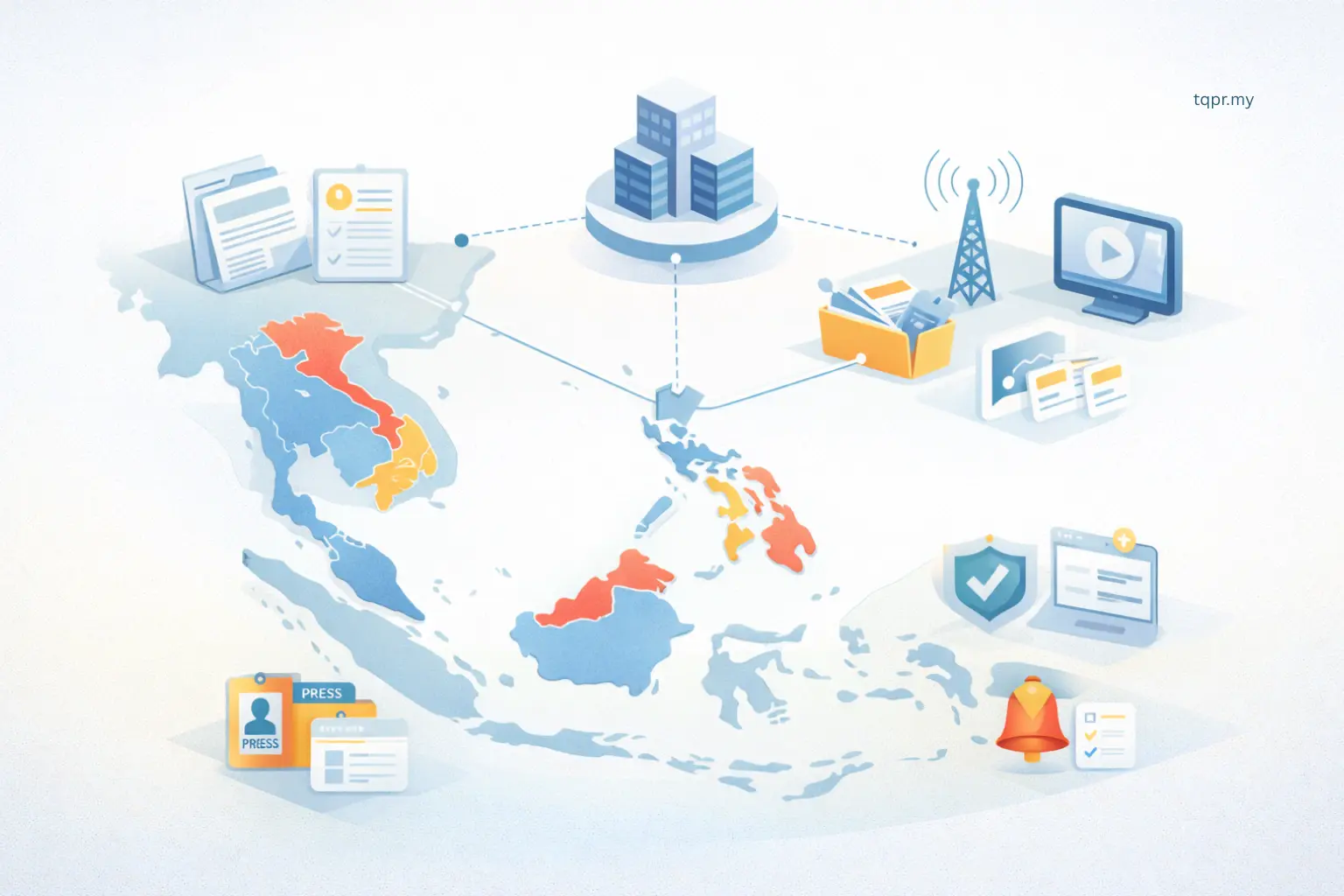
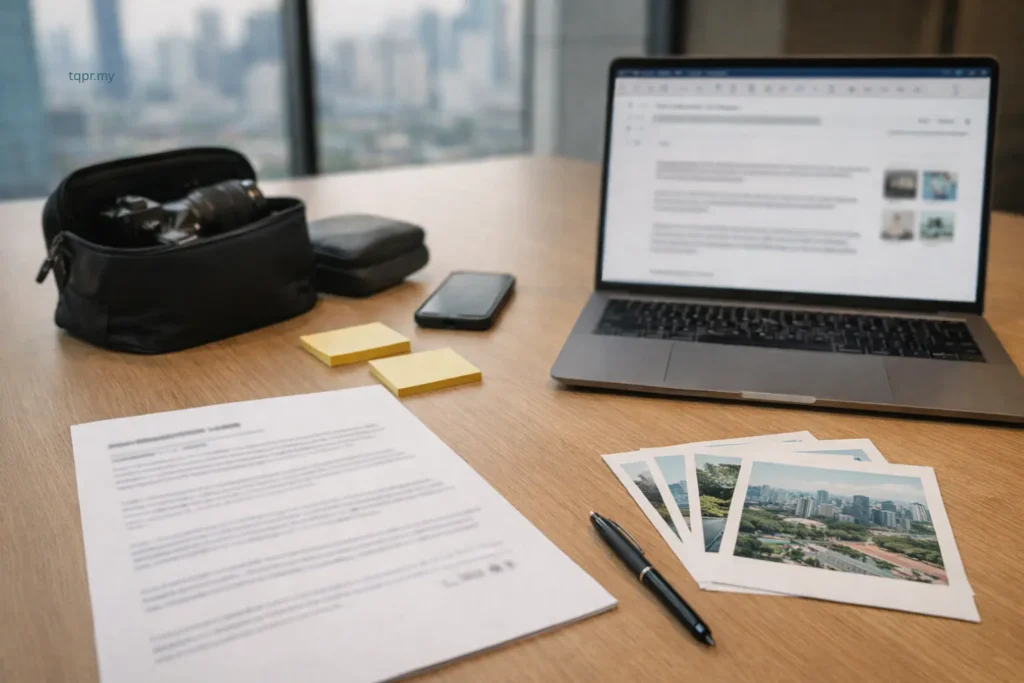
Malaysian journalists want a press release Malaysia teams can use fast, backed by copywriting that meets newsroom standards. A sharp local news hook up top, the 5 Ws in the first paragraph, and specific dates and numbers they can verify. Keep it one page, add a practical quote, include media-ready assets, and make it easy to reach a named spokesperson. Pitch the right beat at the right time and keep it compliant with local content standards, then follow up once or twice with something useful, not noise.
If you’re new to the market, start with our PR in Malaysia field guide to understand how the media landscape really works.
Key Takeaways: Press Release Malaysia Checklist
- Lead with a 1 to 2 sentence news hook answering who, what, when, where, why so editors can lift it into a story immediately.
- Keep the headline under 10 words, and structure the release to scan in under a minute.
- Localise properly. Use Bahasa Malaysia for Malay outlets, and include an English version or link where needed.
- Include verifiable local data, a short timeline, and a quote that sounds like a real person, not corporate filler.
- Pitch by beat, send during weekday 9 to 11am, and include visuals plus spokesperson access.
- Measure pickup beyond clippings. Track opens, replies, coverage quality, message accuracy, and backlinks where relevant.
Quick Checklist: 5 Rules for Press Release Malaysia
- Be usable fast
Headline, dateline, then a lead paragraph with the 5 Ws. If you want a reference structure, use a standard dateline and lead format. No warm-up paragraphs. - Keep it one story
One clear angle. Do not bundle multiple announcements in one email. - Localise for the outlet
Bahasa Malaysia for Malay dailies. If you need bilingual coverage, provide a clean English version or link. - Make it easy to verify
One or two concrete figures, plus source or method in one line if needed. Include a short timeline with dates. - Attach an asset pack and a human contact
High-res visuals, captions, and a named spokesperson with availability and phone number.
Find the Newsworthy Hook Journalists Want
A journalist decides in seconds whether your release is news or marketing.
Do this in the first paragraph:
- State the announcement in one line.
- Show why it matters in Malaysia (policy relevance, industry impact, local rollout, local demand, local problem).
- Include a concrete detail: date, location, scale, or a single headline figure they can verify.
This is basically the newsroom lead approach: get the 5 Ws (and how) in fast.
Keep the angle tight. If you have five “benefits,” pick the one that would actually be a headline. Everything else becomes supporting detail or a link.
Key Facts Malaysian Journalists Need: Data, Timeline, Local Context
Once the hook is clear, journalists want the facts package. Not a brand story.
Include:
- Timeline with dates: launch date, deadlines, event times, spokesperson windows.
- Local relevance: which segments, states, or cities are affected (Klang Valley, Penang, Sabah if relevant).
- Data that is easy to check: one or two figures, plus source, or a one-line method note to avoid back-and-forth.
- A usable quote: short, specific, and tied to the local impact.
- Spokesperson details: name, title, phone, email, and when they are available.
If you mention partnerships, say who they are and what they are doing, in plain terms.
Press Release Format: Subject Lines, One-Page Summary, Visuals
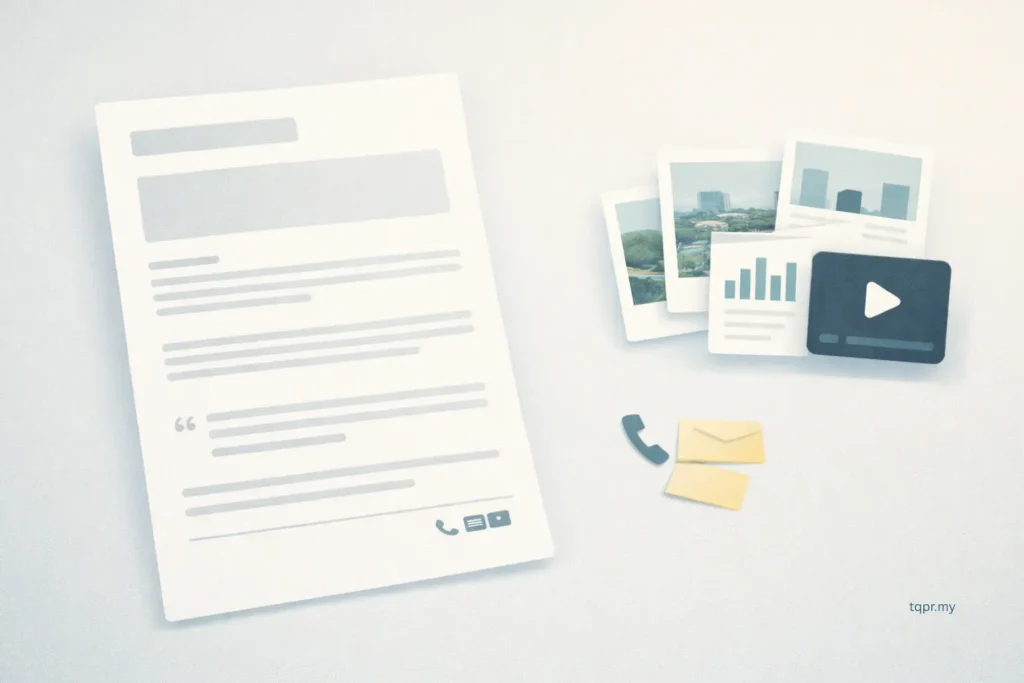
Journalists are scanning. Your formatting either helps them or kills your chances.
Subject line
- Keep it short and specific.
- If you can, keep it around 10 words and lead with the news (not your brand name).
Release structure (one page)
- Headline (under 10 words)
- Dateline (city, date)
- Lead paragraph (5 Ws)
- 2 to 3 short paragraphs of detail
- Bullet key facts (numbers, timeline, availability)
- Quote
- Boilerplate (short company blurb)
- Media contact
- End marker: ###
This press release Malaysia structure works because editors can scan and lift key lines fast.
Asset pack
- High-res images (labelled clearly)
- Captions and credits
- Optional: infographic or a simple chart if it helps explain the story
- Optional: short video clip if it is genuinely useful to publish
Make sure the one-page summary and the assets do not introduce new facts that are not in the release.
Tailor Outreach by Beat, Timing and Channels in Malaysia
Media relations and strategy matters more than “big list blasting.” If you’re choosing between formats, see press events vs virtual briefings vs one-on-ones in Malaysia.
- Match beat to angle: corporate, tech, lifestyle, consumer, or trade.
- Match language to outlet: Bahasa Malaysia for Malay outlets, English for others, with clean links if you provide both.
- Send time: weekday mornings (often 9 to 11am) are a practical window many teams use.
- Lead time: for planned announcements, send 2 to 3 days before where possible, especially if interviews are needed.
Follow-up cadence
- Follow up once around 24 hours later if there’s no reply.
- If needed, do one more follow-up with a new useful detail (a clearer figure, updated availability, a better visual).
- Keep total touches reasonable. A hard cap of 3 to 4 touches for one story is plenty unless they are actively engaging.
Measure Newsroom Pickup: Simple Metrics and Follow-Up Actions
Do not judge press release Malaysia success by ‘we sent it.’
Track:
- Open rate and subject line performance (use your baseline, and many teams use ~35% as a starting benchmark)
- Replies and interview requests
- Coverage count, but also coverage relevance (did they use your main point or distort it?)
- Outlet quality (priority outlets vs random pickups)
- Backlinks and referral traffic if SEO is part of the goal
- Branded search interest and social mentions for lift signals
Then run a short post-campaign review:
- Which beats responded?
- Which outlets ignored it?
- Which assets got used?
- What wording got copied, and what got misunderstood?
That becomes your next release template. If you want a clean KPI set, use our PR KPIs in Malaysia guide.
Press Release Malaysia FAQ
Do we need separate PR strategies for Peninsular and East Malaysia?
Often yes. Keep the core message consistent, but tune examples, spokespeople, and channels. Sabah and Sarawak may need more local radio, community partners, and regional influencers. For a practical segmentation map, refer to our PR in Malaysia field guide.
Should we write in Bahasa Malaysia or English?
Write for the outlet. Use Bahasa Malaysia for Malay outlets. If you need broader pickup, prepare a clean English version or link, but do not mix languages messily in one lead.
What assets should we include with a press release?
At minimum: a one-page release, high-res images, captions and credits, and a named spokesperson contact. Add a simple chart or infographic only if it helps explain the news.
How many data points should we include?
One or two strong, verifiable figures is better than a wall of stats. If the figure needs context, add a one-line source or method note.
How long does it take to see results from PR in Malaysia?
Early signals like replies and pickups can happen within days to weeks. Stronger outcomes like repeat journalist interest and trust build over months of consistent, usable releases.If you’re planning a launch, use our 90-day PR timeline for Malaysia.
Final Word: Send a Press Release Malaysia Editors Trust
If you want Malaysian journalists to run your story, make their job easy. Lead with a local hook, put the 5 Ws up top, keep it one page, and include numbers they can verify, a usable quote, and a reachable spokesperson. Pitch by beat, send during weekday 9 to 11am, follow up sparingly, and measure what actually moved. If this release is part of a market entry, build your rollout around a 90-day PR timeline so you’re not improvising week to week. And if the topic has any reputational risk, keep a first-24-hours crisis checklist ready before you hit send.